
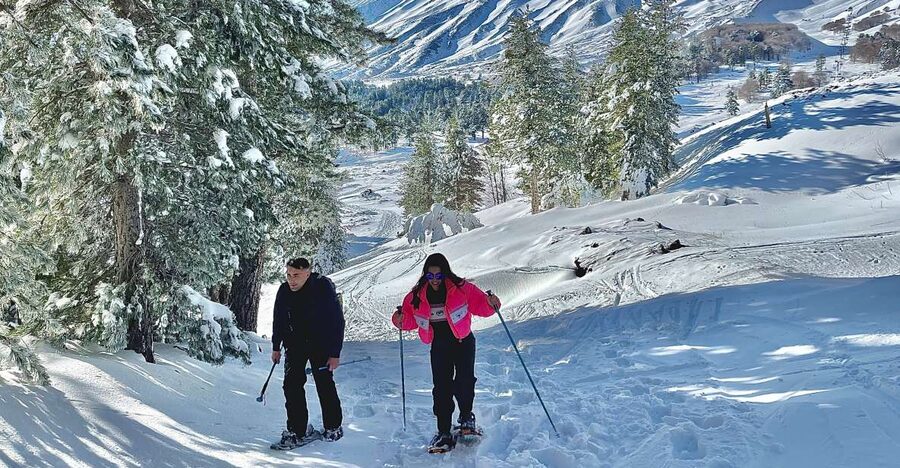
Review · ITALY
Piano Provenzana: Guided Mt. Etna Snowshoeing Trek
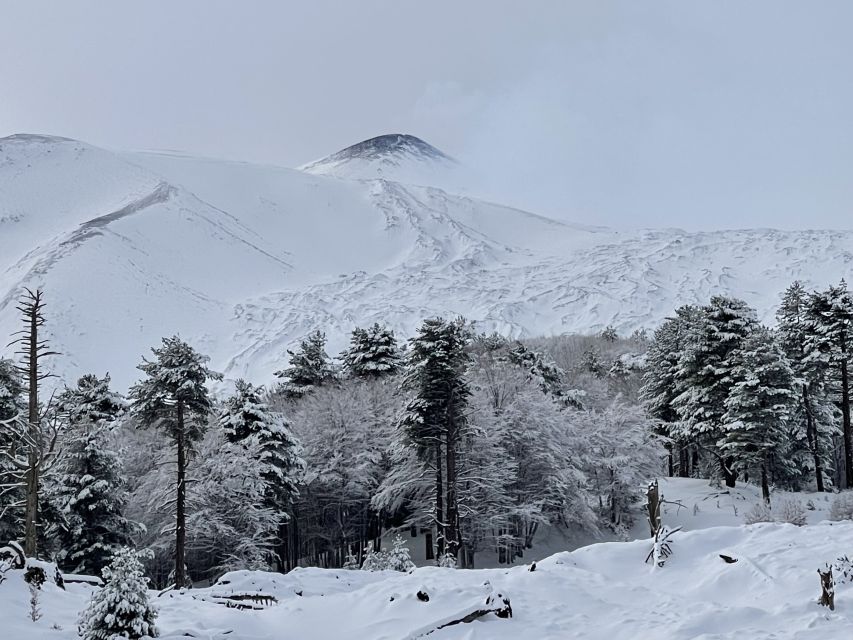
Mt. Etna in winter is a striking mix of white snow and black volcanic rock. From Piano Provenzana, you’ll climb through snowy woods, cross old lava flows, and reach the large side craters formed during the 2002 eruption.
I like the sea views toward Taormina and Giardini Naxos, and I like that the route leads to places where lava destroyed parts of the old resort. The catch is simple: the $44 price does not include snowshoes, poles, parking, or several pieces of cold-weather gear.
Key points to know before you go
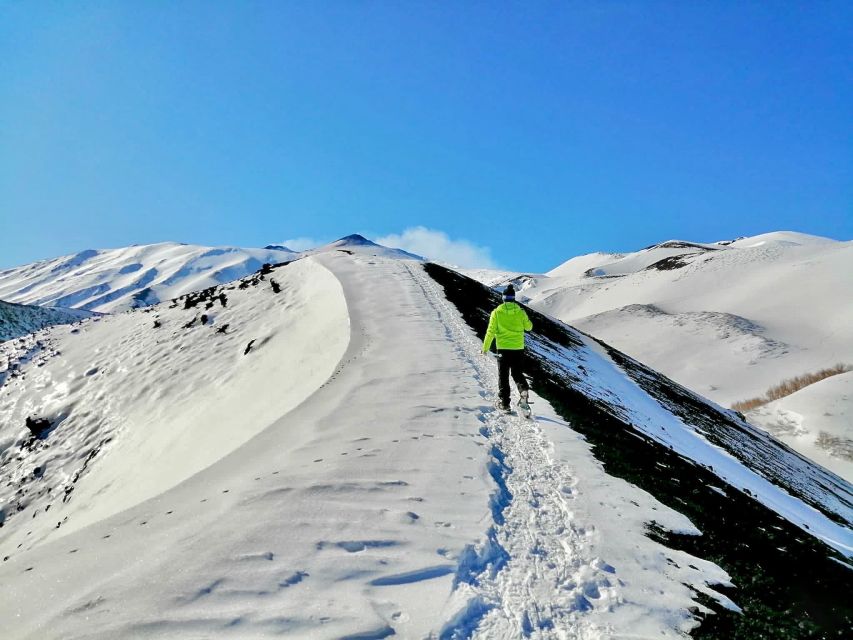
- The route reaches 2,200 meters, with about 300 meters of uphill climbing over a 5-kilometer return walk.
- The 2002 lava craters are the main reward, giving you a close look at the forces that changed Piano Provenzana.
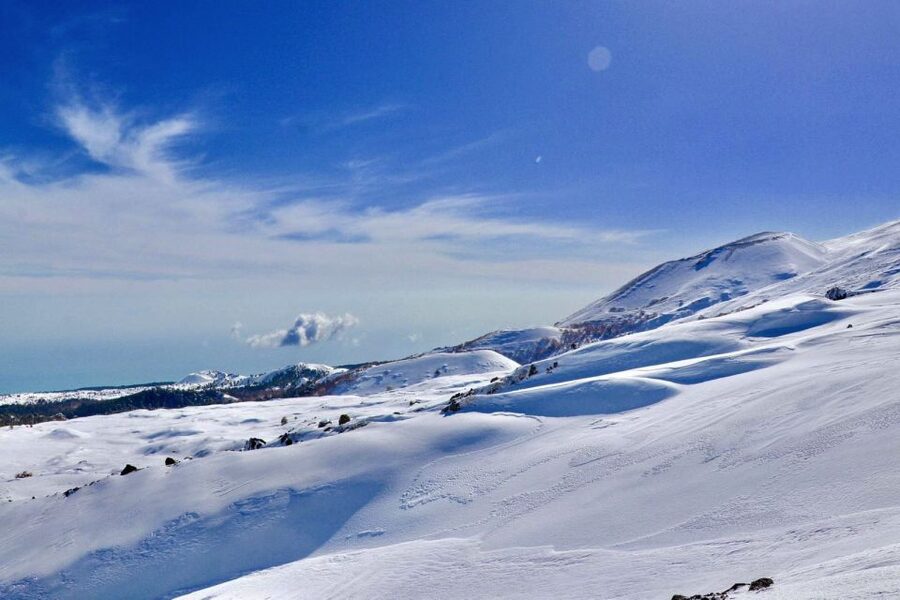
- Views stretch from the snowy summit to the sea, and clear weather may reveal Calabria.
- The $44 tour covers the volcanological guide only, while snowshoes and poles cost an additional €12 per person.
- Meeting early matters on busy ski days, since parking near the chairlift can fill quickly.
- This is a real mountain walk, not a gentle stroll, and it is not suitable for people with low fitness or several listed medical conditions.
Snow, lava, and the north side of Etna
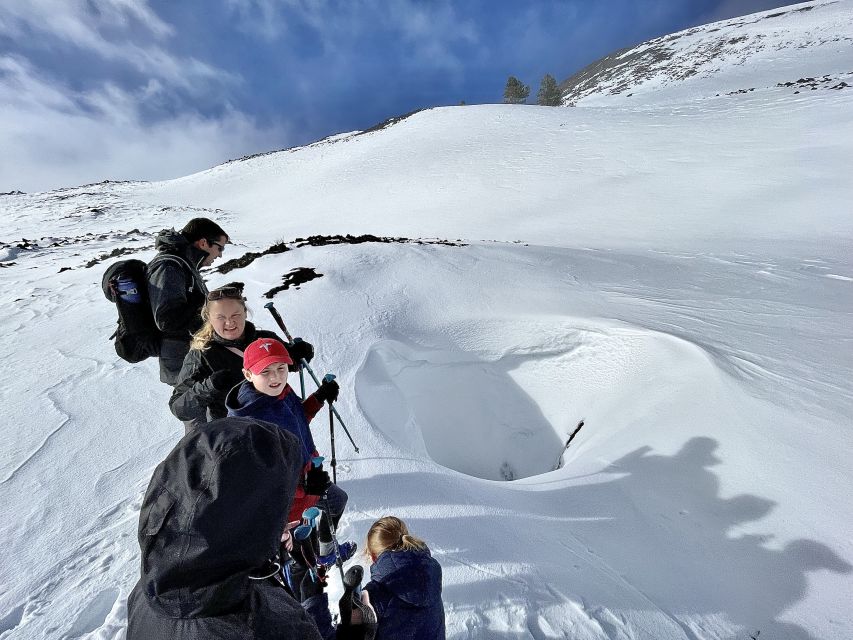
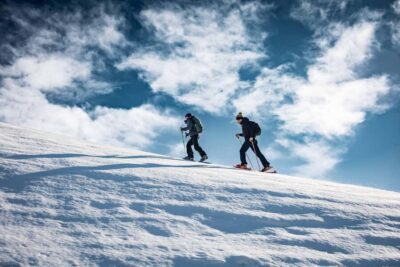
What makes this outing special is the sharp contrast under your feet and all around you. Snow softens the slopes, while dark lava rocks, broken ground, and old eruption craters keep reminding you that Etna is an active volcano.
You begin at Piano Provenzana, on Etna’s north side, at about 1,800 meters. In winter, this area becomes a ski setting, but the snowshoe route takes you away from the ordinary ski-day experience and into a quieter volcanic setting.
The walk covers about 5 kilometers out and back. You gain roughly 300 meters in height and spend around three hours outside, including stops for photos, explanations, and free time.
The route is not long by mountain standards, but snow changes the effort. You will lift each foot higher with snowshoes, walk over uneven volcanic ground, and climb steadily toward the side craters. If you are comfortable with a moderate hike and arrive in proper clothing, the distance should feel manageable. If you have a low level of fitness, the combination of cold, altitude, snow, and uphill walking may feel demanding.
Your guide comes from Guide Vulcanologiche Etna Nord and provides the volcanological service included in the price. The tour is available in Italian, French, and English, so you can choose the language that works best for you when booking.
More Snowshoeing Tours in Italy:
- Guided Snowshoeing Day to Discover the Dolomites
★ 5.0 · 23 reviews - Scenic snowshoe hike in Sestriere
★ 4.7 · 12 reviews - Vialattea: Snowshoeing in the Snowy Forest
★ 4.9 · 10 reviews
Starting at Piano Provenzana
The meeting point is the parking area near the active chairlift at Etna Nord, outside Chiosco Bar Mareneve. The business name to look for is Chiosco Bar Mareneve di Ferraro.
Allow extra time to find the place and park. On busy winter days, many skiers arrive at the same time, and the meeting time may be brought forward to 8:45 or 9:00 in order to help you secure a parking space. This is one of those small details that can make the difference between starting calmly and beginning the walk already rushed.
Parking costs €5 for the full day on weekdays and €8 on Sundays and public holidays. That fee is separate from the tour price.
The first part at Piano Provenzana includes about 15 minutes for free time and a safety briefing. Use this pause to check your clothing, adjust your footwear, and make sure you have water and anything else you need before leaving the resort area.
The briefing matters here. Etna’s north side combines snow, exposed volcanic rock, changing weather, and a steady climb. Your guide can explain how the route will work and what to expect before you move into more open terrain.
Walking through the snowy forest
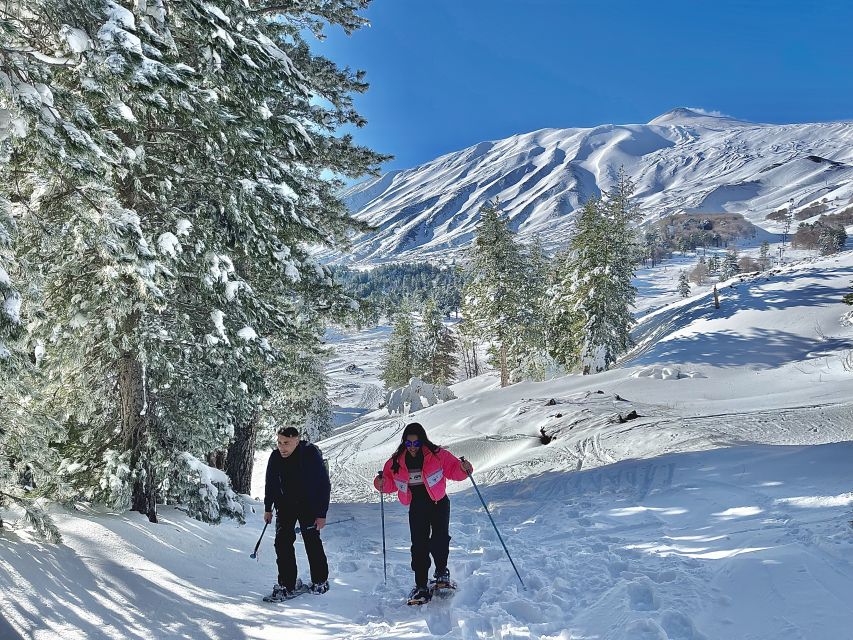
The route begins in a snowy forest. This gives you a gentler introduction before the scenery opens toward lava flows and craters.
The woods also show a different side of Etna. You are not looking only at a high, bare volcano. Trees, snow, dark rock, and distant sea views appear together, giving the walk a strong sense of change as you gain height.
The snow can make familiar shapes look new. Lava rocks become black forms against a white surface, while branches and folds in the ground may be partly covered. Sunglasses are useful because sunlight reflected off snow can be intense, even when the air is cold.
The route includes a photo stop of about 10 minutes. That scheduled pause gives you time to take in the view without feeling that you need to keep moving. It is also a good chance to adjust layers, since climbing can make you warm while wind at higher points can quickly make you cold again.
Bring a jacket, gloves, hat, warm clothing, and rain gear. You should also carry sunscreen, even in winter. The supplied information specifically warns that gloves and hats are not included, so do not assume you can borrow them at the meeting point.
Crossing the 2002 lava flows
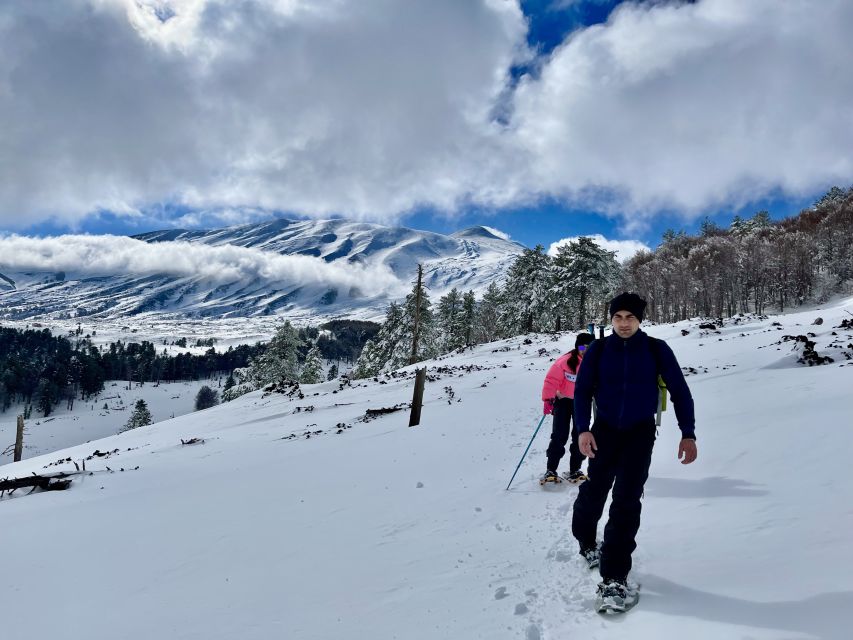
As you leave the forest, the route reaches the lava flows from eruptions on Etna’s north side. This is where the walk becomes more than a snow outing.
The 2002 eruption damaged the tourist resort at Piano Provenzana. Along the route, you pass through areas shaped or destroyed by those lava flows, then continue toward the large side craters created during the eruption.
That contrast gives the walk its strongest sense of place. You are not viewing volcanic rock from a distant lookout. You are moving through a section of Etna where the ground records a recent eruption and where the shape of the resort changed because of lava.
A guided walk is especially useful here. The dark rock and snow are visually powerful, but without context it can be hard to understand what you are seeing. The volcanological guide helps connect the craters, fractures, lava flows, and damaged structures into one clear story.
There is a guided tour segment of about 20 minutes, followed by a longer stop of roughly 30 minutes that combines photos, sightseeing, explanations, and free time. This is likely the heart of the outing. You have time to look closely, ask questions, and enjoy the setting rather than treating the craters as a quick turnaround point.
More Walking and Hiking Trips in Italy:
- One day hike with snowshoes to discover Dolomites
★ 5.0 · 10 reviews - Snowshoe hike to the Cinque Torri
★ 5.0 · 2 reviews - From Tromsø: Snowshoeing Hike with Picnic Lunch and Photos
★ 4.9 · 840 reviews - Rovaniemi: Hiking and Snowshoeing Adventure in Lapland
★ 4.4 · 753 reviews
Reaching the side craters at 2,200 meters
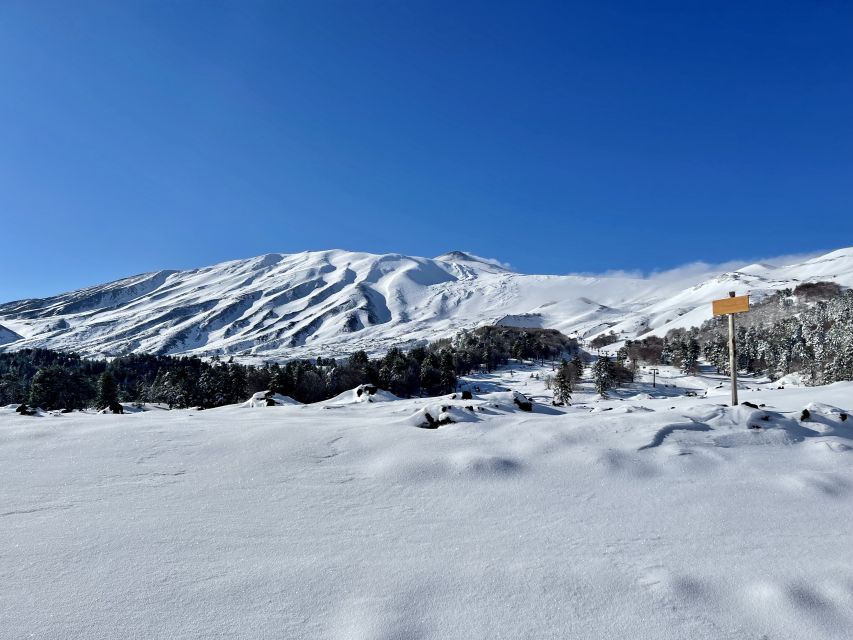
The main destination is the group of large side craters at about 2,200 meters. The climb from Piano Provenzana is around 300 meters, so you earn the views rather than reaching them by a flat walk.
From the top of the craters, you can look across the snow-covered upper slopes of Etna toward the summit craters. Etna remains active, and volcanic gases may be visible near the summit. The experience does not take you to the summit itself, but it gives you a strong high view of the upper volcano from a safer and more practical route on the north side.
Looking in the opposite direction, you may see the sea around Giardini Naxos and Taormina. On a very clear day, Calabria can also appear in the distance. Visibility is weather dependent, so do not book this expecting a guaranteed view of every landmark.
The summit and sea views work well together. One direction shows the broad reach of Sicily and the coast. The other points toward the active volcanic heart of Etna. Snow makes both views more dramatic, but it also means clouds, wind, and changing light can affect what you see.
At this point, you will probably appreciate the scheduled free time. The craters are the place to slow down, take photographs, and let the guide’s explanation sink in. It is also where cold-weather preparation matters most. Open high ground can feel much colder than the forest, and a windbreaker or warm outer layer is important.
What the $44 price really covers
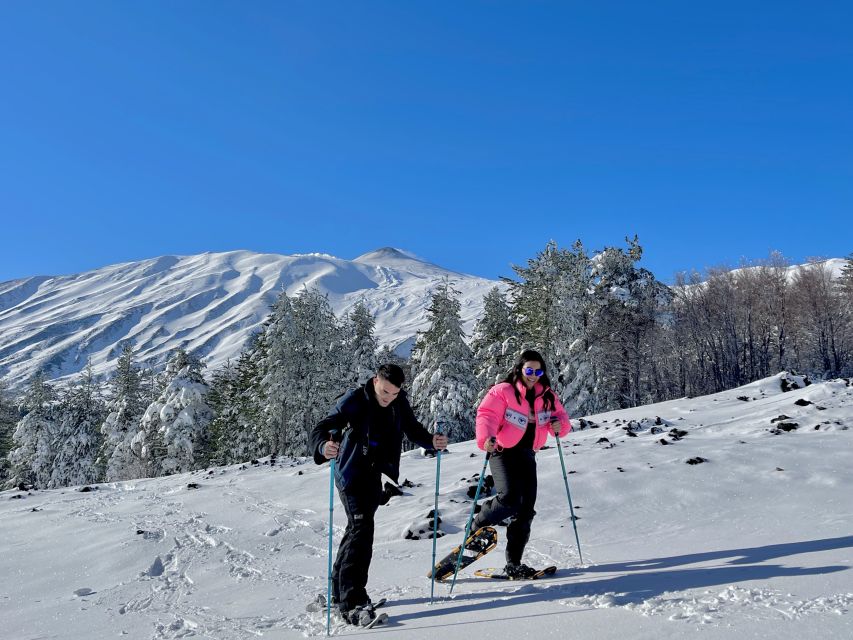
At $44 per person, the tour offers good value if you want a guide who can explain Etna’s volcanic features while leading you through winter conditions. The included volcanological guide service is the core of the experience.
The price does not include the snowshoes or trekking poles. These can be rented from authorized rental businesses on site for €12 per person. Since snowshoes are central to the activity, include that extra amount in your budget rather than treating it as an optional luxury.
Other costs and rental items include:
- Parking: €5 on weekdays and €8 on Sundays and public holidays
- Trekking shoes: €5 per pair, if needed
- Windbreaker: €5, if needed
- Snowshoes and trekking poles: €12 per person
A snack and bottled water are not included. Neither are a ski suit, jacket, gloves, or hat. You should bring your own water, food, and suitable clothing rather than relying on last-minute purchases.
The value is strongest for someone who already owns hiking shoes and winter clothing. If you need to rent shoes, outerwear, snowshoes, and poles, the final cost can rise well above the advertised price. That does not make the tour poor value, but it does make the headline price incomplete for anyone arriving without mountain gear.
Clothing and footwear for a winter volcano
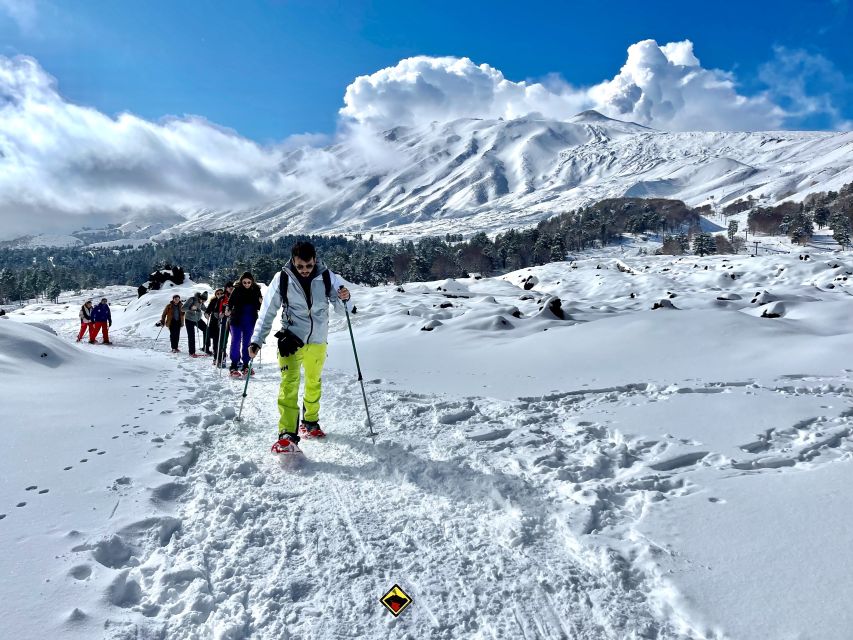
Wear hiking shoes with good grip. Sandals, flip-flops, open-toed shoes, and high heels are not allowed, and they would be unsafe on snow and broken volcanic ground in any case.
Dress in layers. Breathable clothing helps during the climb, while a warm jacket and wind protection matter during stops at the craters. Long pants, gloves, a hat, and snow clothing are sensible choices.
Pack a change of clothes if you have room. Snow can wet your trousers or footwear, and a spare layer is useful if the weather changes. Rain gear is also recommended because conditions on Etna can shift.
Snowshoes and poles are rented separately from authorized businesses on site. If you are unsure what footwear or equipment you need, ask at the rental point before starting. The guide service does not include this equipment.
Fitness, health, and the feel of the walk
This excursion is not suitable for people with back problems, mobility impairments, heart problems, respiratory issues, epilepsy, high blood pressure, recent surgery, or other pre-existing medical conditions listed for the activity. It is also not suitable if you are afraid of heights or have a low level of fitness.
That list is worth taking seriously. The walk reaches 2,200 meters, includes a 300-meter climb, and takes place in snow. Even though the total distance is only 5 kilometers, the cold and uneven ground can make the outing more tiring than a similar walk at sea level.
You should also be comfortable walking with snowshoes. They are not difficult equipment, but they change your stride and can feel awkward at first. Trekking poles can help with balance and are included in the €12 snowshoe rental charge when rented as part of the package described.
The tour can be a refreshing break from towns and busy sightseeing, but it is still an active mountain outing. Choose it because you want to walk through snow and volcanic terrain, not simply because you want a quick viewpoint.
Weather, cancellations, and language
Etna weather can affect the route and the views. If conditions are unsafe or unsuitable, the provider may cancel or postpone the excursion and contact you as early as possible.
This policy is useful for a winter activity. A cloudy day may still provide a worthwhile walk, but poor weather can reduce the sea views and make the upper craters less comfortable. Keep your plans flexible enough to handle a change.
The guide service is offered in Italian, French, and English. Check the available language when you reserve, especially if clear volcanic explanations are important to you.
You can cancel up to 24 hours ahead for a full refund, and the reserve-now, pay-later option lets you hold a place without paying immediately. Those terms are helpful when your Sicily plans depend on weather.
Who will enjoy this Etna snowshoe trek
I would choose this outing if you want a close look at Etna’s volcanic features and do not mind putting in some effort to reach them. It suits people who like walking, photography, unusual geology, and open mountain views.
It is also a good choice if you have already seen Etna from a vehicle or a standard lookout and want a more active way to experience the north side. The route combines forest, snow, lava flows, fractures, lateral craters, damaged resort structures, and summit views in one compact outing.
I would hesitate if your main goal is comfort, easy transport, or a guaranteed clear view. Snow conditions, wind, and cloud can shape the day, and the tour does not include transport to the meeting point or the equipment needed to walk.
The small set of published ratings gives the experience a perfect five out of five, and the strongest praise focuses on three things: the guide, the views, and the trail itself. That matches the tour’s real appeal. It is not built around luxury or extras. Its value comes from a good route and a guide who can help you understand what you are seeing.
Should you book it?
Book this tour if you want a three-hour winter walk through recent volcanic history, with snow, lava, and high views toward the sea and summit. The 2002 craters and destroyed resort structures give the route more meaning than a simple snowy hike.
Before booking, add the €12 equipment rental, parking, and any clothing rentals to your budget. Confirm that you have the fitness and health profile for a 300-meter climb in snow, then watch the weather forecast closely.
For an active visitor with proper clothing and a clear interest in Etna, this is a strong-value way to see the volcano from its north side. For anyone seeking an easy scenic stop, choose a less demanding Etna experience instead.
FAQ
How long does the snowshoeing trek last?
The activity lasts about three hours, including walking time, guide explanations, photo stops, and free time.
How far is the walking route?
The route is about 5 kilometers in total, including the return walk.
How much uphill climbing is involved?
The trek has a total positive height difference of about 300 meters.
How high does the route go?
The starting point at Piano Provenzana is about 1,800 meters above sea level. The route reaches the large side craters at about 2,200 meters.
What is included in the price?
The $44 price includes the volcanological guide service.
Are snowshoes and poles included?
No. Snowshoes and trekking poles can be rented from authorized rental businesses on site for €12 per person.
Where do I meet the guide?
Meet in the parking area near the active chairlift at Etna Nord in winter, outside Chiosco Bar Mareneve di Ferraro.
What views might I see?
You may see Giardini Naxos and Taormina from the route. In clear conditions, you may also see Calabria and the snow-covered upper slopes of Etna toward the summit craters.
What languages are available?
The guide service is available in Italian, French, and English.
What should I bring?
Bring warm clothing, hiking shoes, sunglasses, a hat, gloves, sunscreen, water, food, a jacket, rain gear, and suitable snow or trekking clothing. Gloves and hats are not included.
Can the tour be canceled because of weather?
Yes. In adverse weather conditions, the provider may cancel or postpone the excursion and advise you as early as possible. You can also cancel up to 24 hours in advance for a full refund.
Just added around Italy
- Vialattea: Snowshoeing in the Snowy Forest★ 4.9 · 10 reviews
- Vialattea: Night Snowshoeing under the Stars★ 4.5 · 5 reviews
- From Milan: Valmalenco 1-day Ski Pass with Train and Shuttle★ 5.0 · 2 reviews
- Sellaronda ski & Snowboard Tour★ 5.0 · 2 reviews
- 3 Hours of Snowshoeing with Alpine Guide in Val Brembana★ 5.0 · 4 reviews
- Freeride Private Lessons – Skiing★ 5.0 · 2 reviews
- Freestyle Private Lesson – Snowboarding★ 5.0 · 3 reviews
- Snowshoe hike to the Cinque Torri★ 5.0 · 2 reviews
Italy Ski Trips, compared.
Guided Snowshoeing Day to Discover the Dolomites
Read our review →
Browse the lists this tour appears in