
Review · JAPAN
Lake Tachibana: Snowshoe to a frozen lake!
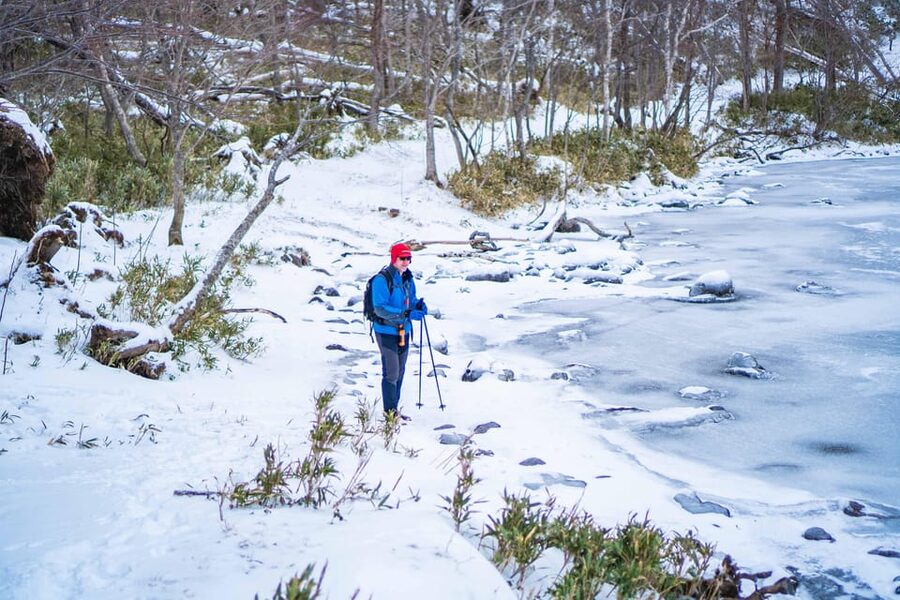
Lake Tachibana is the payoff for a quiet winter hike, not a quick roadside stop. You snowshoe from Karurusu Onsen through white forest, climb gradually to a ridgeline, then descend to a frozen lake with striking ice formations. The peaceful setting and the sense of reaching somewhere rarely seen by tourists are the real draw.
I like the small seven-person limit and the personal guiding from Aidan, who explains animal tracks and plants while matching your pace. I also like the simple finish: a hot drink beside the lake, with tea, coffee, or hot chocolate in hand. The catch is clear: this is a physical 4-kilometer outing, and snowshoeing uphill over uneven ground is harder than it may look.
Key points about the Lake Tachibana snowshoe hike
- A remote frozen-lake destination: Lake Tachibana freezes over each winter and develops unusual ice formations.
- A forest route from Karurusu Onsen: The path begins fairly flat, climbs to a ridgeline, then drops toward the lake.
- A small group of no more than seven: This gives the guide room to adjust the pace and explain tracks, plants, and the route.
- A warm drink at the lake: Tea, coffee, or hot chocolate helps take the edge off the cold.
- Useful winter equipment supplied: Snowshoes and gaiters are included, with hiking poles available if requested.
- A demanding outing for adults and older teens: You need to manage uneven snowy ground for about 4 kilometers.
Starting from Karurusu Onsen in the snow
The tour begins around Karurusu Onsen, near Noboribetsu. Free pickup and drop-off are available from accommodations in Noboribetsu and Noboribetsu Onsen, which makes this much easier than arranging your own transport to a remote trailhead.
Look for a grey or black Mitsubishi Delica with license plate 207. You need to provide the name of your accommodation when booking so the pickup can be arranged properly.
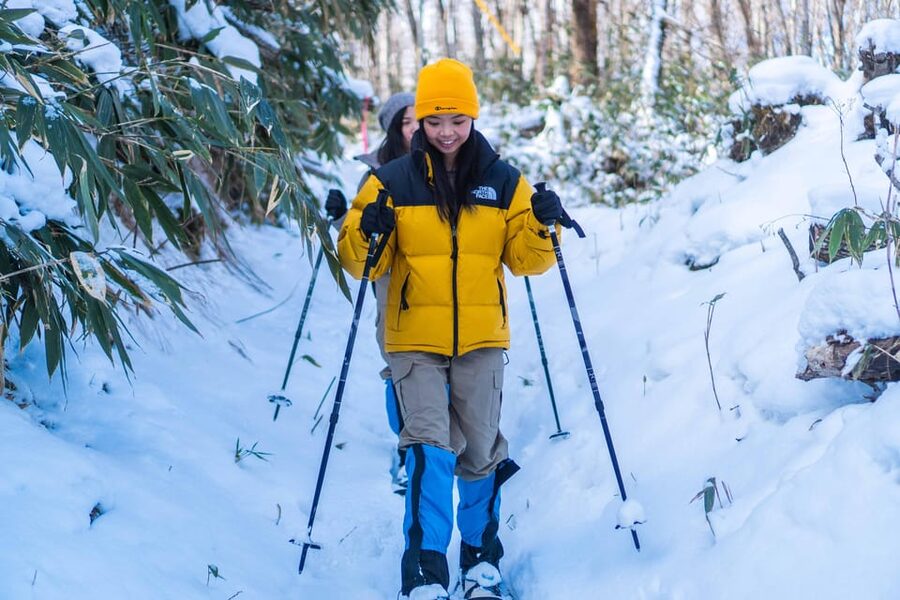
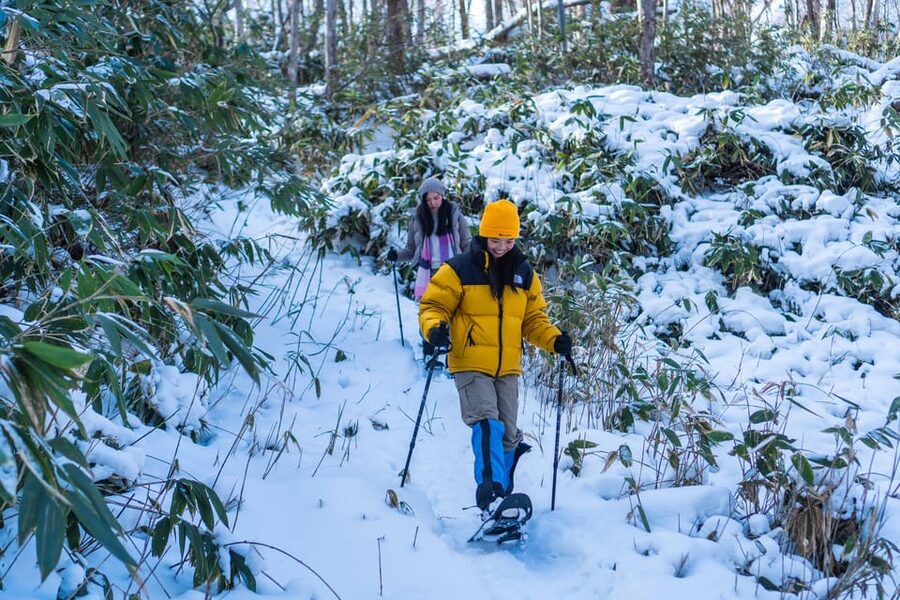
Once you arrive, the guide fits you with snowshoes and gaiters. Hiking poles are available if you request them. Your own footwear still matters, since the supplied snowshoes do not replace waterproof, supportive shoes or boots.
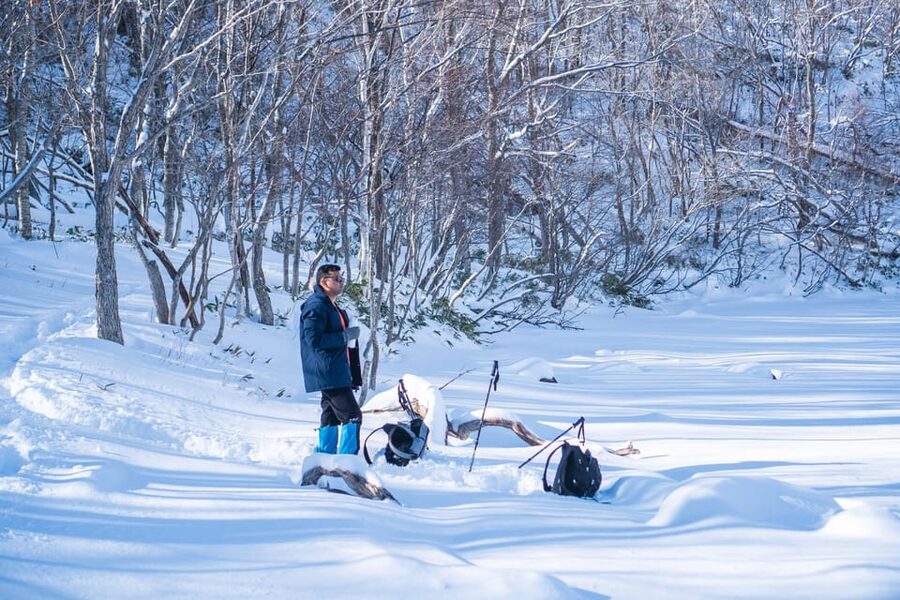
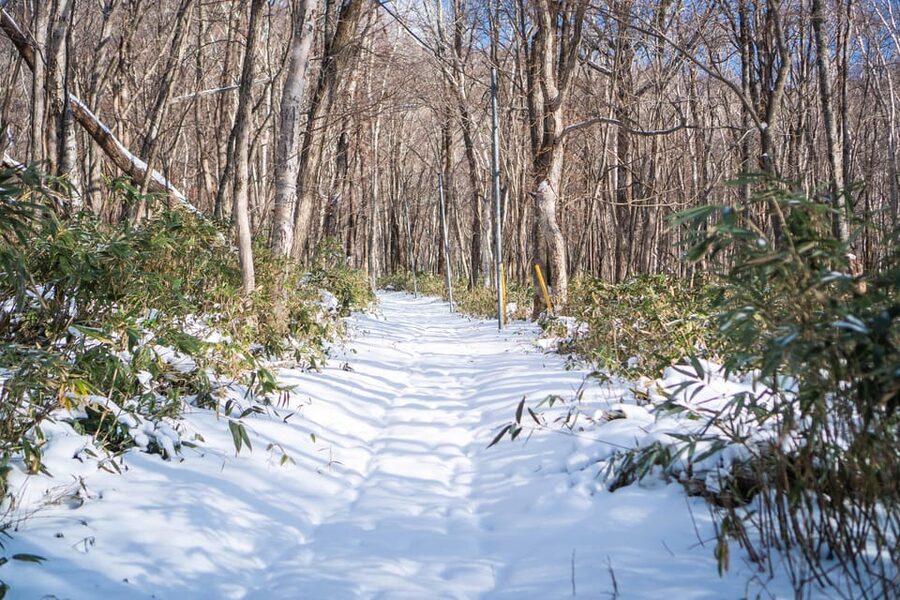
The first part of the route passes through snow-covered forest. The path starts relatively flat, giving you time to get used to the snowshoes and settle into the walking rhythm. Snowshoeing feels different from ordinary hiking: each step is wider, the equipment adds weight, and deep snow asks more from your legs.
This is where Aidan’s guiding style matters. He can point out animal tracks and plants along the way, turning what might otherwise be a quiet white corridor into a closer look at the winter forest. The route is not just a transfer to the lake. The forest is part of the experience.
More Snowshoeing Tours in Japan:
- Snowshoeing and Onsen Adventures in a Winter Wonderland -Sapporo.
★ 5.0 · 30 reviews - Snowshoe Hike Tour from Sapporo include hotel p/up & drop off
★ 5.0 · 16 reviews - Nagano Snowshoe Hiking Tour
★ 5.0 · 14 reviews
Climbing the ridgeline
After the gentler opening, the trail gradually winds uphill toward the top of a ridgeline. It is not described as a technical climb, but you should not confuse that with an easy walk. Snow, uneven ground, and the added effort of snowshoes make a gradual ascent feel substantial.
You need to be comfortable climbing and descending across uneven terrain. The total route is about 4 kilometers, and the walk to the lake takes just over an hour. The full experience lasts 210 minutes, allowing time for the hike, the lake stop, and the return journey.
I like the fact that the group is capped at seven people. A small party is better suited to a narrow winter path than a large tour bus group, and it gives the guide more control over the pace. Aidan has been praised for matching walking speed rather than forcing everyone into one rigid rhythm. That is useful on a snowy climb, especially when one person in the group needs a little more time.
Still, you should expect effort. Snowshoeing can make a gentle-looking slope tiring, and mountain weather can change quickly even when the morning begins bright. Bring enough warm clothing for a pause as well as for walking. You may feel hot while climbing, then quickly cold when you stop.
Descending toward frozen Lake Tachibana
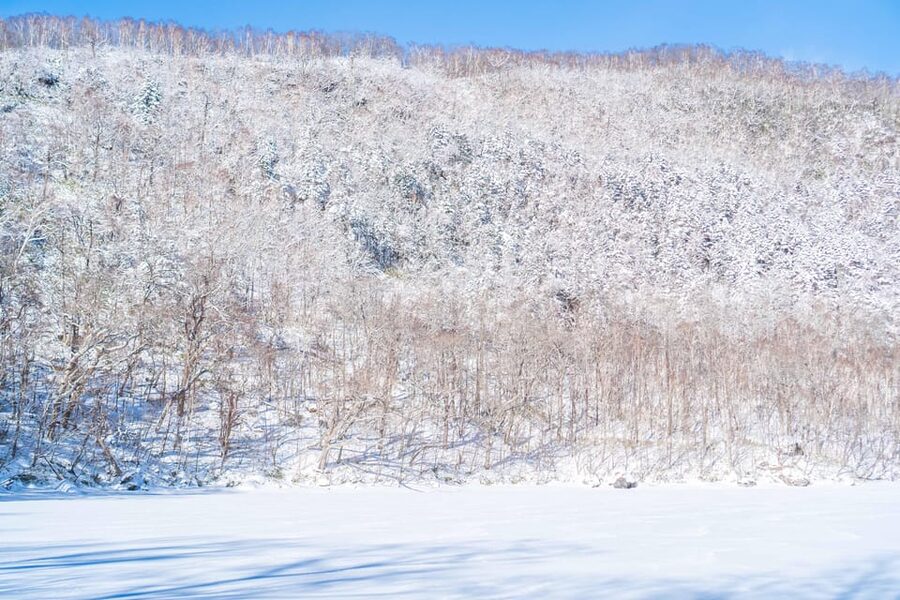
At the ridgeline, the route descends on the far side toward Lake Tachibana. This change in direction gives the hike a satisfying sense of progress. You are not simply circling a marked park path. You climb through the forest, cross the high point, and then make your way down to a destination that has been hidden from view.
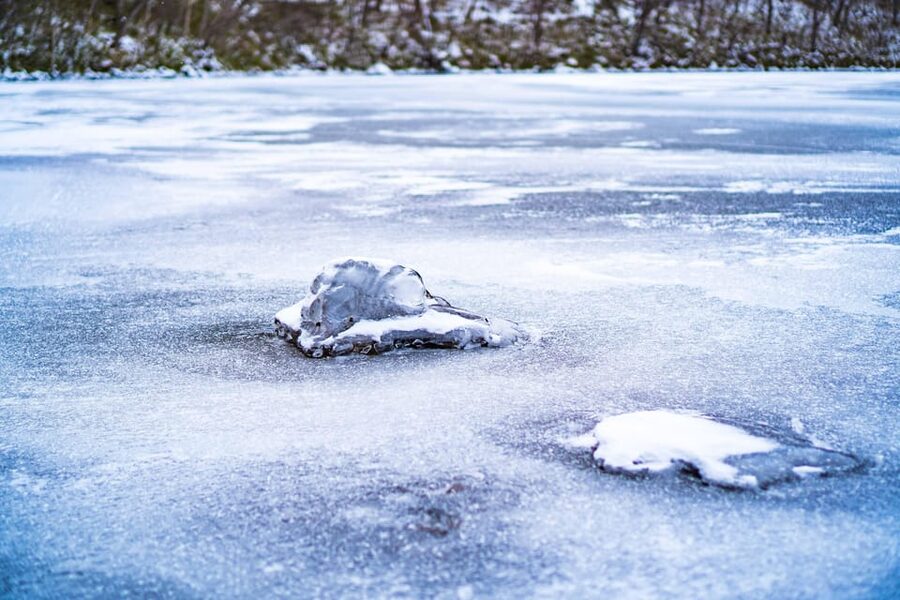
In winter, the entire lake freezes. Snow surrounds the water, and ice formations create the main visual reward. The exact shapes and surface conditions will vary with the weather, so you should expect a natural winter setting rather than a polished attraction with fixed viewpoints.
That is part of the appeal. Lake Tachibana is described as a little-visited power spot near Noboribetsu, and the route is aimed at people who want quiet surroundings instead of a crowded sightseeing stop. You may find yourself focused on small details: the texture of the snow, the patterns in the ice, or tracks crossing the route.
The setting also explains why good clothing is not optional. The lake area can feel colder than the climb, particularly when the wind picks up. A hat, gloves, and something to cover your neck are sensible choices. One useful tip is to bring gloves warm enough for standing still, not just thin gloves that work while you are moving.
A hot drink beside the frozen lake
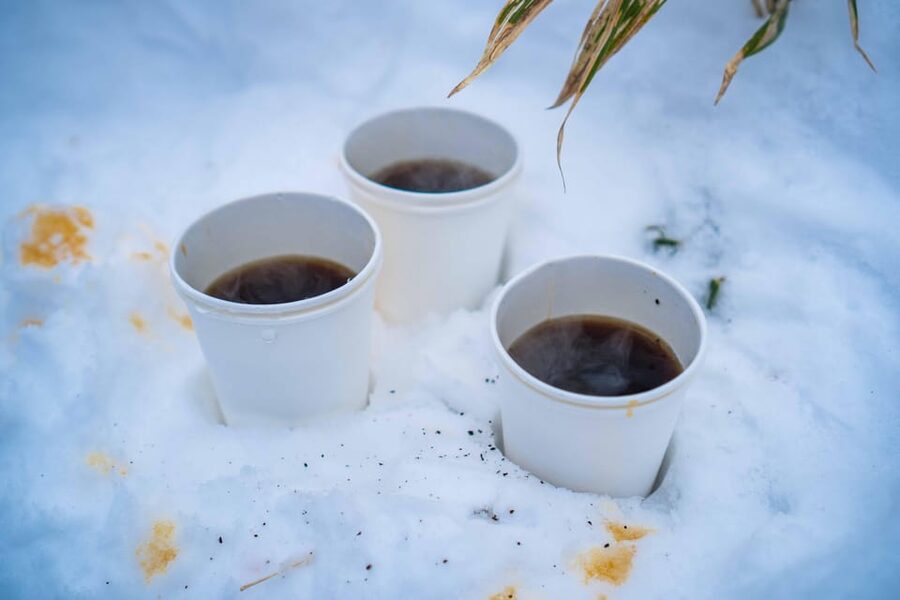
At Lake Tachibana, you have time to rest with a hot drink. Tea, coffee, or hot chocolate is included, and crackers may also be served. This small pause is more important than it sounds. After a snowy climb, a warm drink gives you time to enjoy the setting without immediately thinking about the return route.
The stop also creates a natural break in the outing. You can take in the frozen lake and ice formations, catch your breath, and let the guide explain more about the area. The experience is not built around a long list of stops. It is one forest walk leading to one quiet destination, followed by a simple outdoor rest.
Hot chocolate may be the obvious choice after a cold hike, but coffee or tea suits anyone who wants something less sweet. The drink is not a meal, so you should eat properly beforehand and carry water. A small backpack is useful for water, spare layers, gloves, and personal items.
A few more snow days around Japan worth a look
- Nagano Ski Buffet
★ 5.0 · 47 reviews - Nagano: 1-Day Ski Tour Package from Nagano Station
★ 4.9 · 35 reviews - Ski or Snowboard Lesson in Shiga Kogen (4Hours)
★ 5.0 · 34 reviews - 1-Day Ski Tour Package from Nagano Station
★ 5.0 · 30 reviews
Returning through the snowy forest
The tour returns after the lake visit, following the route back toward Karurusu Onsen. The return is part of the physical challenge. You still need to manage snowshoes and uneven ground, and the descent and later uphill sections may feel different after several hours outside.
This is why I would avoid treating the tour as a casual winter stroll. You do not need to be an expert mountaineer, based on the information provided, but you should be able to walk 4 kilometers and climb up and down uneven terrain. The experience suits people who are comfortable with active outdoor days and who do not mind getting damp or tired.
The guide can end the tour if an injury occurs or if conditions become unsafe. Bad weather may also cause the outing to be canceled or postponed when possible. That safety policy is sensible for a mountain route, though it means you should keep some flexibility in your Noboribetsu plans.
If you can choose a morning departure, I think it is worth considering. Finishing earlier gives you the option of spending the rest of the day at one of Noboribetsu’s hot springs, which is an excellent match for a cold snowshoe outing. Starting time depends on availability, so check the schedule before planning your onsen visit.
What the $96 price includes
At $96 per person, this is not a bargain-basement walk, but the price covers several practical elements. You get pickup and drop-off, snowshoes, gaiters, a hot drink, and a live English or Japanese-speaking guide. Hiking poles are also available if requested.
The transport matters most. Lake Tachibana is not presented as a simple self-guided attraction, and reaching a winter trailhead near Karurusu Onsen would otherwise require extra planning. Equipment rental is another useful saving, especially if you are visiting Japan for only a few days and do not own snowshoes.
You still need to bring warm clothes and suitable footwear. The tour does not include a backpack, so that cost is yours if you need one. You are also responsible for your own travel insurance, since Nobo Tours does not provide insurance for participants.
For me, the value is strongest if you want a guided winter outing rather than only a lake view. The guide, transport, equipment, and hot drink turn a remote snowy route into a manageable half-day plan. If you already have snowshoes, transport, and winter hiking experience, the price may feel less compelling. If you are staying in Noboribetsu and want a small-group activity beyond the usual sights, it is easier to justify.
Clothing and equipment that will make the day better
Do not arrive in jeans. They hold moisture and become cold, which is a poor combination when you are walking through snow.
Wear warm layers that you can adjust as you climb. A thin warm base and mid-layer can work well, but you need a waterproof outer coat and waterproof trousers for snow and changing weather. Waterproof hiking shoes or high-sided boots are preferred because they help keep your feet dry and give you better support.
Bring:
- Warm, waterproof clothing
- Hiking shoes or high-sided waterproof boots
- A warm hat
- Gloves suitable for standing still
- A scarf or neck warmer
- Water
- A light backpack
Gaiters are included, which helps keep snow from entering around your lower legs. Snowshoes are supplied, and poles can be requested. A scarf deserves special attention. Cold air, wind, and a runny nose are small issues until you are standing beside a frozen lake without one.
You should prepare for bad weather even if the forecast looks good. Mountain conditions can shift quickly, and the tour may be canceled or postponed if the weather is unsafe. I would pack as if the coldest part of the day will happen during the rest stop, not during the uphill section.
Who should book this experience
I would recommend this tour to adults and older teens who want quiet scenery, a real winter walk, and a destination that is not crowded with sightseeing groups. The small group size suits people who prefer a personal guide and a calm pace.
It is also a good fit if you are staying in Noboribetsu or Noboribetsu Onsen and want to combine outdoor activity with a later hot spring visit. The pickup service keeps the day simple, and the 210-minute duration leaves room for other plans.
I would not choose it for a relaxed family outing with young children. Participants under 16 are not accepted, and the tour is not suitable for wheelchair users or people over 70. The terrain and snow conditions require steady footing, strength, and the ability to climb and descend.
You should also think twice if you dislike cold weather, uphill walking, or flexible plans. The lake is the reward, but reaching it requires work. That effort is exactly what makes the arrival feel worthwhile, yet it will not suit everyone.
The guide makes the difference
Aidan is the guide named for this experience, and his approach is a strong part of the appeal. He explains animal tracks and plants, keeps the mood friendly, and can match your pace during the climb. That makes the outing feel more like a guided walk with a capable companion than a formal group march.
He also lends practical items when available, including gaiters and a neck scarf. You should not depend on borrowed clothing, but this shows the kind of hands-on support that can matter in winter.
English and Japanese guiding are offered. The group limit of seven keeps the experience personal and gives you a better chance to ask questions or stop briefly without holding up a large party.
Should you book the Lake Tachibana snowshoe hike?
Book it if you want a quiet, active winter experience near Noboribetsu and like the idea of earning your view of a frozen lake. The combination of snowy forest, ice formations, a small group, and a hot drink makes the outing feel distinct from a standard sightseeing tour.
Skip it if you want an easy walk, dislike cold-weather gear, or need a fully fixed schedule. The route is physical, weather can change, and you must supply your own clothing, footwear, water, and insurance.
For the best day, choose a morning slot if available, wear waterproof layers, bring warm gloves and a scarf, and leave time afterward for Noboribetsu’s hot springs. At $96, the tour offers good value for visitors who need transport, equipment, and a guide in one package. The main question is not the price. It is whether you want to work for the quiet.
FAQ
Where does the Lake Tachibana snowshoe tour take place?
The tour takes place near Noboribetsu, Japan. It begins in Karurusu Onsen and follows a snowy forest route to frozen Lake Tachibana.
How long does the experience last?
The tour lasts 210 minutes, or three and a half hours. The walk to the lake takes just over an hour.
How far do participants snowshoe?
The route covers about 4 kilometers and includes climbing and descending over uneven terrain.
Is pickup included?
Yes. Free pickup and drop-off are available from Noboribetsu and Noboribetsu Onsen. The vehicle is a grey or black Mitsubishi Delica with license plate 207.
What equipment is provided?
Snowshoes and gaiters are included. Hiking poles are available if requested.
Is a drink included?
Yes. You receive a hot drink at the lake, with tea, coffee, or hot chocolate available. Crackers may also be provided.
What should I bring?
Bring warm clothing, hiking shoes or high-sided waterproof boots, and water. A hat, gloves, scarf, and light backpack are also practical for the conditions.
Can children join the tour?
No. The activity is not suitable for children under 16 years old.
What happens if the weather is bad?
The tour may be canceled or postponed if bad weather occurs. If an injury happens or the guide decides it is unsafe to continue, the tour will finish. Participants need to arrange their own insurance.
Just added around Japan
- Private ski lesson for family or group(Transport included )★ 5.0 · 2 reviews
- Full Day Snowboard Lesson (6 hours)★ 5.0 · 3 reviews
- First snow play & snowshoe★ 5.0 · 2 reviews
- Full Day Ski Lesson (6 hours) in Yuzawa, Japan★ 5.0 · 12 reviews
- EN/CN Guided Snowshoeing and Snow Monkey Tour in Nagano★ 5.0 · 2 reviews
- 3 hours Snowshoe hike to “Furepe fall” and Wildlife Watching★ 5.0 · 9 reviews
- 4.5 hours Snowshoe hike in Shiretoko five lakes★ 4.5 · 2 reviews
- Snowshoe Hiking Tour in Tazawako★ 5.0 · 4 reviews
Japan Ski Trips, compared.
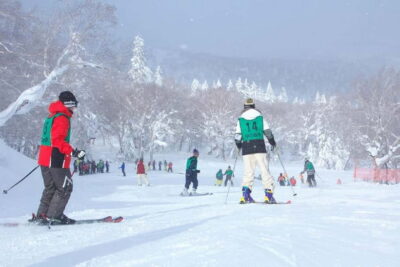
Nagano: 1-Day Ski Tour Package from Nagano Station
Read our review →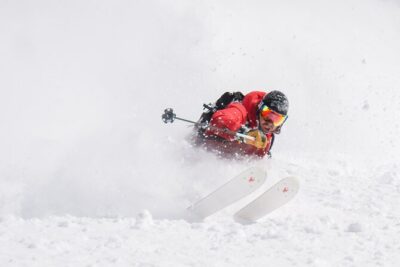
Ski or Snowboard Lesson in Shiga Kogen (4Hours)
Read our review →
Full Day Private Skiing / Snowboarding Tour in Sapporo
Read our review →
Snowshoeing and Onsen Adventures in a Winter Wonderland -Sapporo.
Read our review →
From Tokyo: Fujiyama Snow Resort Yeti Winter Ski Day Tour
Read our review →
Sapporo: Otaru Asarigawa Ski Resort Day Trip with Gear
Read our review →Browse the lists this tour appears in