
Review · JAPAN
Snowshoeing on a Sparkling Biei Hill & Winter Cafe Time
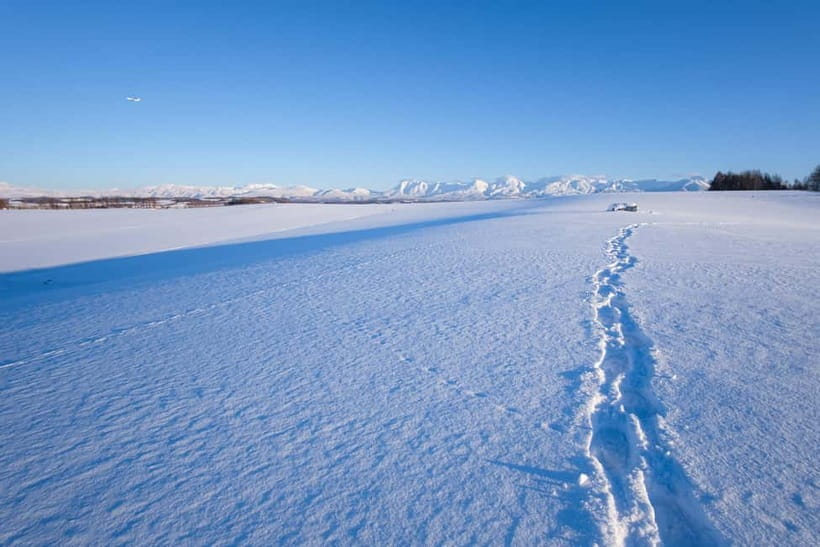
Biei’s snowy farm fields are normally off-limits, but this outing takes you onto a hill with the farmer’s permission. That access is the real treat: you get wide, quiet views and room for snow angels, snow fights, and simple games without a crowd. The afternoon light can make the snow sparkle in several colors.
I like the easygoing snowshoeing, which needs no past experience, and the useful gear package, including snowshoes, poles, gaiters, and hand warmers. I also like the warm finish at a local cafe, especially after time outside. The main catch is that you must bring serious winter clothing, particularly waterproof insulated pants, and the farm has no toilets or shops.
Key points
- Private access to a working farm: Walk on a snowy Biei hill that ordinary visitors cannot enter.
- Afternoon snow sparkle: Low winter light can create multicolored flashes across the snow.
- Snowshoeing for beginners: No previous snowshoe experience or unusually high fitness level is required.
- A complete warm-up kit: Snowshoes, poles, gaiters, hand warmers, and transport are included.
- English-speaking local guide: Hattie has led the activity, and the tour is offered as a private group.
- Cafe time with Biei views: End with one included drink before returning to JR Biei Station.
Why this Biei outing feels different
Biei is famous for its rolling farm country, but winter changes the rules. Snow covers the fields in a smooth white layer, and many agricultural areas are not places you can simply walk into. This experience gives you permission to enter one local farm and walk up a snowy hill with a Dohoku Local guide.
That permission matters. You are not just stopping at a roadside viewpoint, taking a quick photograph, and moving on. You get time to walk, look around, and play. The setting is simple, but that is part of its charm. There are no shops, signs, or busy attractions on the hill. Just snow, sky, farm country, and the sound of your own group.
The activity lasts 150 minutes from the meeting at Biei Station to your return there. About 1.5 hours is set aside for the guided Biei portion, with the remaining time used for the drive and cafe stop. The exact start time varies, so check availability when you book.
More Snowshoeing Tours in Japan:
- Snowshoeing and Onsen Adventures in a Winter Wonderland -Sapporo.
★ 5.0 · 30 reviews - Snowshoe Hike Tour from Sapporo include hotel p/up & drop off
★ 5.0 · 16 reviews - Nagano Snowshoe Hiking Tour
★ 5.0 · 14 reviews
Meeting at JR Biei Station
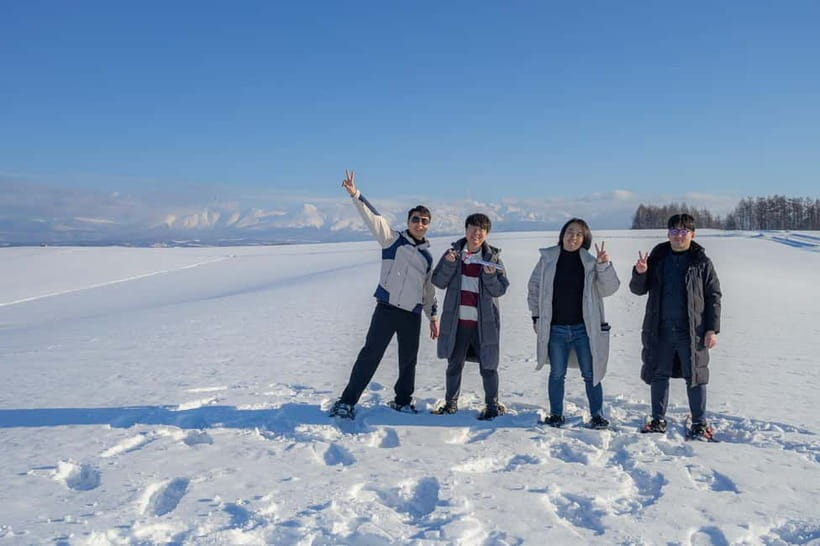
You meet in the waiting room at JR Biei Station. This is a practical starting point because you do not need to find a remote farm by rental car or arrange a taxi through winter conditions. Transportation to the farm and back is included.
Use the station facilities before leaving. The farm has no toilets, vending machines, convenience stores, or other services, so this is not the place to discover that you forgot water, gloves, or a snack. You should also keep your phone charged, since it may be your main camera and contact tool during the outing.
The station meeting point is especially useful if you are building a day around Biei by train. You can arrive, meet the guide, and leave the driving to someone familiar with the local roads. At the end, you return to the same station, which keeps the plan tidy.
Riding out to the permitted farm
From Biei Station, your Dohoku Local drives you to a nearby farm. The transport is provided at no extra charge, and the private-group format means the outing is not built around a large busload of people.
The farm access is one of the most important parts of the experience. The guide has permission from the farmer to enter the snowy fields and hill, while nearby areas may remain off-limits. You need to follow the guide closely around field boundaries. A snowy path can look open, but that does not mean every adjoining field is available for walking.
This is also why the tour feels more personal than a standard viewing stop. You are visiting a working agricultural area under specific permission, not treating the countryside as an open public park. Stay within the allowed area, listen when the guide gives directions, and avoid wandering toward neighboring fields.
Learning snowshoes without fuss
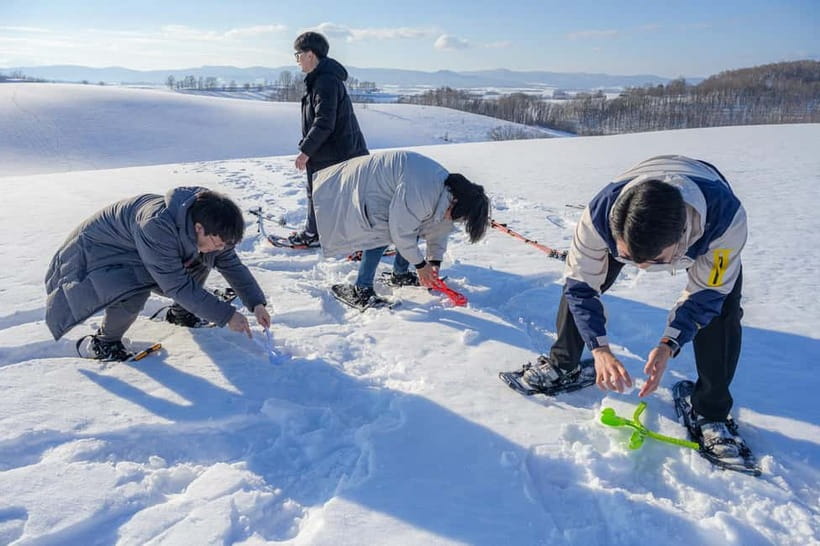
Snowshoeing here is meant to be approachable. You do not need previous experience, and the activity does not call for a particularly high level of fitness. Your guide provides snowshoes and poles, then helps you get moving across the snow.
The snowshoes spread your weight over a larger area, making it easier to walk on soft snow. You may still find the footing unfamiliar at first. Take shorter steps, keep your pace comfortable, and let the poles help with balance. The outing is not presented as a race or a demanding mountain trek.
Snow gaiters are included as well. They help keep snow from getting into your footwear, which becomes important when you are walking uphill or playing in deeper snow. Hand warmers and other warming items are also supplied, but they do not replace proper clothing.
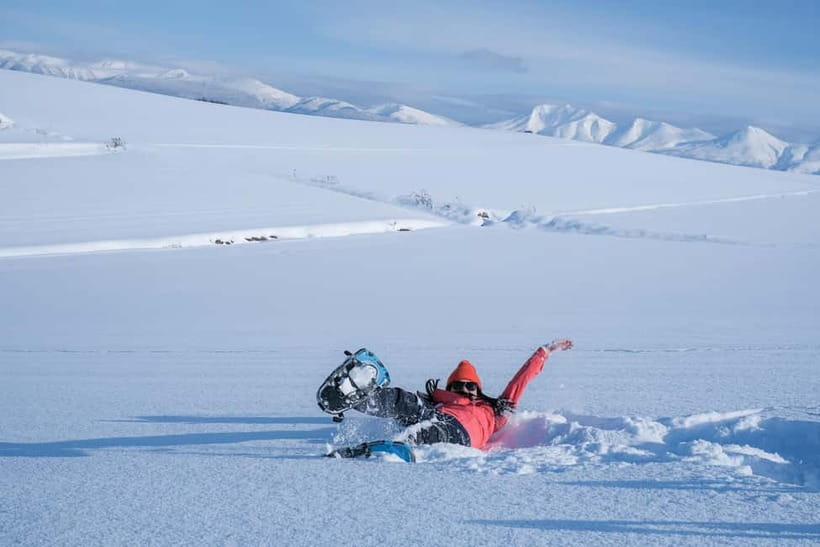
The guide may bring along games for the group. You can also make snow angels and have snow fights, so this is not a strictly serious nature walk. The playful side makes the experience a good fit for adults who want more than a photograph and for families with older children, provided everyone meets the age and mobility requirements.
A few more snow days around Japan worth a look
- Nagano Ski Buffet
★ 5.0 · 47 reviews - Nagano: 1-Day Ski Tour Package from Nagano Station
★ 4.9 · 35 reviews - Ski or Snowboard Lesson in Shiga Kogen (4Hours)
★ 5.0 · 34 reviews - 1-Day Ski Tour Package from Nagano Station
★ 5.0 · 30 reviews
Walking toward the sparkling hilltop
The hill is the centerpiece. You walk upward through Biei’s white winter fields, with views across the surrounding countryside. The climb is described as manageable, but you should still expect to spend real time outside in snow. The surface may feel uneven underfoot, and the cold can build quickly if your clothing is not up to the job.
The light is a special part of the timing. In the afternoon, the sun reaches the snow at an angle that can create tiny flashes of different colors. The effect depends on sunlight and weather, so it is not a guaranteed show, but it gives the walk a reason to slow down and look closely.
Bring sunglasses. Snow can reflect a surprising amount of light, even on a cold day. A camera is worth carrying too, though your hands may be happier inside warm gloves. If you use a smartphone, keep it charged and protect it from the cold as best you can.
At the top, the plan is not simply to turn around. You can spend time enjoying the hill, taking photographs, making snow angels, throwing snow, or joining a simple game. That open time is valuable because it lets you set the pace. You can take in the view quietly, or treat the hill as a giant outdoor play area.
One of the strongest features of this outing is the chance for quiet. A February outing led by Hattie was described as taking place with no one else around the hill, which made the pure white setting feel especially peaceful. You should not assume every departure will be completely empty, but the permitted farm setting gives you a better chance of space than a crowded sightseeing stop.
What the guide adds
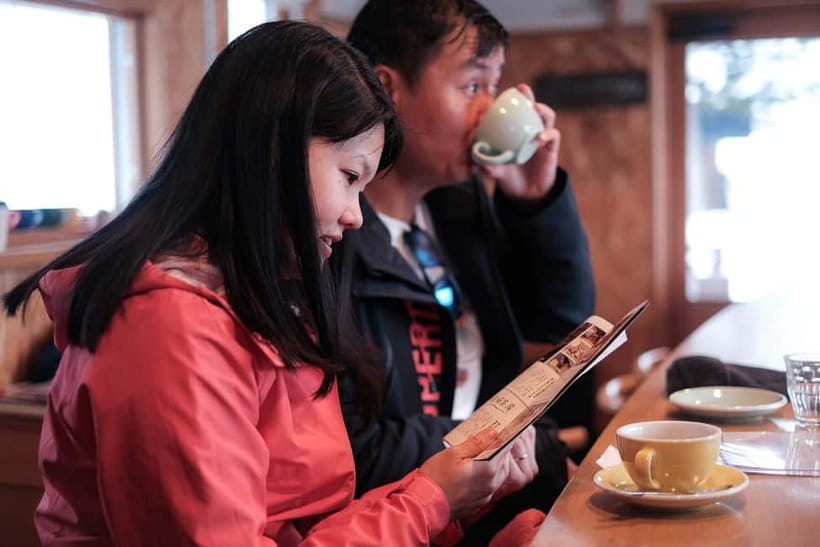
Your English-speaking Dohoku Local guide handles more than directions. The guide provides the transportation, prepares the snow equipment, helps you use the snowshoes, and keeps the group within the permitted area.
Hattie has guided this activity and was praised for being kind and flexible with other plans. That flexibility can be useful if you are trying to fit lunch, train times, or another Biei stop into the same day. Still, leave enough room in your schedule for weather and winter roads rather than planning a tight connection immediately afterward.
The guide can also point you toward nearby food options. One outing included a lunch recommendation that was considered excellent, though the restaurant had a queue. That is useful local help, but it also means you should not assume a suggested restaurant will offer instant service during a busy meal period.
Warming up at a local cafe
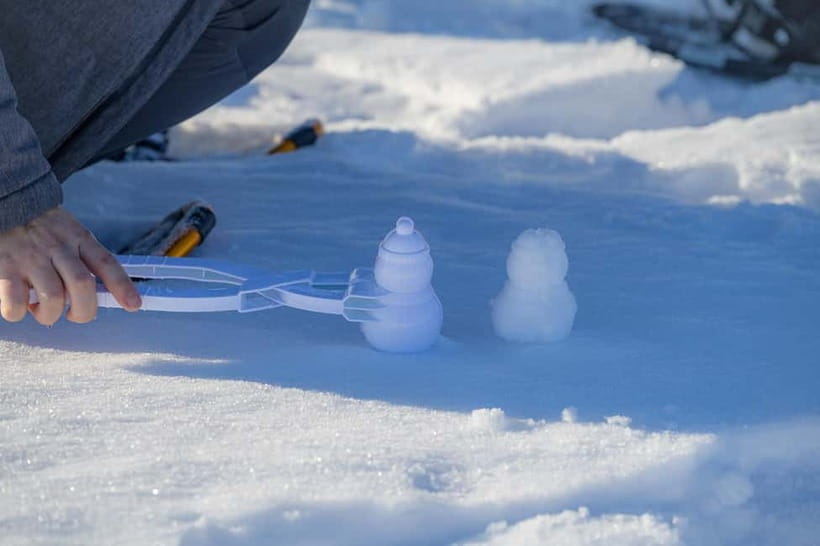
After the snowshoeing, you drive to a nearby cafe with views across Biei’s snowy countryside. One drink is included in the price. This stop gives your hands and feet a chance to recover, and it makes the outing feel like a complete winter experience rather than a walk that ends abruptly at the farm.
The cafe is subject to holiday closures. If the advertised cafe is closed, the guide takes you to another nearby cafe instead. The exact menu, seating, and view can therefore vary, and additional food or drinks are not included.
I like this finish because it adds a distinctly local pause. You are not returning to the station cold and wet with no place to sit. A hot drink, a window view, and a little conversation with the guide make a sensible ending to time outdoors.
If you want a full meal, budget separately. The included drink is a warm-up, not lunch. Also remember that queues may affect nearby restaurants, so leave extra time if you have a meal plan after the tour.
Clothing matters more than fitness
The activity is beginner-friendly, but winter clothing is your responsibility. Bring a warm jacket, hat, gloves, scarf, long-sleeved layers, long pants, and waterproof shoes. The most important recommendation is waterproof insulated pants. Ordinary trousers can become cold and wet quickly when you sit in the snow, kneel for a photograph, or play around on the hill.
Avoid jeans, shorts, skirts, and soft leather or suede shoes. Snowshoe grips can damage delicate footwear, and the operator accepts no responsibility for unsuitable shoes. Open-toed shoes and high heels are not allowed, for obvious reasons.
A sensible packing list includes:
- Insulated, waterproof outer layers
- Gloves, hat, and scarf
- Waterproof shoes with room for warm socks
- Sunglasses
- Charged smartphone or camera
- Cash and a credit card
- Any personal winter accessories you normally need
You do not need to bring snowshoes, poles, gaiters, or hand warmers. Those are supplied. The supplied equipment was described as being in very good condition, which makes the $64 price easier to justify.
Who should book this experience

This is a strong choice if you want a small-scale outdoor outing rather than a packed sightseeing schedule. It suits adults, couples, friends, and families with children aged 12 or older who can walk through snow and enjoy unstructured playtime.
It is also useful for people without a car. You meet at Biei Station, receive transport to the farm, and return to the station afterward. That removes one of the harder parts of winter sightseeing in rural Hokkaido.
You should skip it if you dislike cold-weather activities, cannot walk across snowy ground, or need regular access to toilets and indoor facilities. It is not suitable for children under 12, wheelchair users, people with mobility impairments, or people with heart problems or high blood pressure.
The outing is canceled free of charge if blizzards or dangerous winds make the walk unsafe. That is sensible, but it can affect a tightly planned winter itinerary. Keep a backup plan for your time in Biei.
Is $64 a fair price?
At $64 per person, the cost covers more than a guided walk. You get transportation, snowshoes, poles, gaiters, hand warmers, an English-speaking local guide, private-group service, and one cafe drink.
The value is strongest if you do not already have winter gear or a rental car. Buying or arranging snowshoes for a short visit would take time and money, while driving to a rural farm in snowy conditions brings its own concerns. The special farm access also gives this outing something that a public park walk may not.
The price is less compelling if you already own snowshoes, have a car, and only want a quick view of Biei’s winter fields. You are paying for local access, equipment, transport, guidance, and the cafe finish, not for a long expedition or a full meal.
Free cancellation up to 24 hours before the start and the reserve-now, pay-later option make it easier to fit into a changing winter plan. Read the clothing rules carefully before booking, because the included equipment does not cover jackets, hats, gloves, or ski pants.
The practical call
Book this if you want to play in Biei’s winter countryside, value local access, and like the idea of ending with a hot drink and a view. The quiet hill, permitted farm setting, and complete equipment package give the outing a clear purpose beyond taking photographs from the roadside.
Pass if you need a strenuous snow trek, a guaranteed particular cafe, a full meal, or a fully indoor activity. For most suitable participants, though, this is a gentle and personal way to meet Biei in winter. Just use the station facilities first, dress for wet snow, and leave your schedule loose enough for weather and cafe changes.
FAQ
Where does the snowshoeing experience begin?
You meet your English-speaking Dohoku Local in the waiting room at JR Biei Station.
How long does the experience last?
The full activity lasts 150 minutes. The guided Biei portion is listed as 1.5 hours, with transportation and the cafe stop included in the overall visit.
Is transportation included?
Yes. Transportation from JR Biei Station to the local farm and back is included.
Are snowshoes provided?
Yes. Snowshoes and poles are provided, along with snow gaiters and hand warmers.
Do I need previous snowshoeing experience?
No. The activity is designed to be easy to start and does not require previous experience or a particularly high level of fitness.
What should I wear?
Bring warm clothing, a jacket, hat, gloves, scarf, long pants, and waterproof shoes. Waterproof insulated pants are especially recommended.
Is a cafe drink included?
Yes. One drink at the local cafe is included. Additional food and drinks cost extra.
What happens if the advertised cafe is closed?
You visit a different nearby cafe if the advertised cafe is closed because of an unscheduled holiday.
Is the activity available in English?
Yes. The tour has a live English-speaking guide.
Who cannot take part?
The activity is not suitable for children under 12, people with mobility impairments, people with heart problems, wheelchair users, or people with high blood pressure.
Just added around Japan
- Private ski lesson for family or group(Transport included )★ 5.0 · 2 reviews
- Full Day Snowboard Lesson (6 hours)★ 5.0 · 3 reviews
- First snow play & snowshoe★ 5.0 · 2 reviews
- Full Day Ski Lesson (6 hours) in Yuzawa, Japan★ 5.0 · 12 reviews
- EN/CN Guided Snowshoeing and Snow Monkey Tour in Nagano★ 5.0 · 2 reviews
- 3 hours Snowshoe hike to “Furepe fall” and Wildlife Watching★ 5.0 · 9 reviews
- 4.5 hours Snowshoe hike in Shiretoko five lakes★ 4.5 · 2 reviews
- Snowshoe Hiking Tour in Tazawako★ 5.0 · 4 reviews
Japan Ski Trips, compared.
Nagano: 1-Day Ski Tour Package from Nagano Station
Read our review →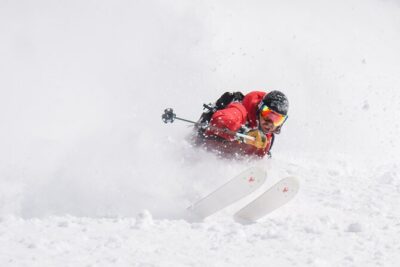
Ski or Snowboard Lesson in Shiga Kogen (4Hours)
Read our review →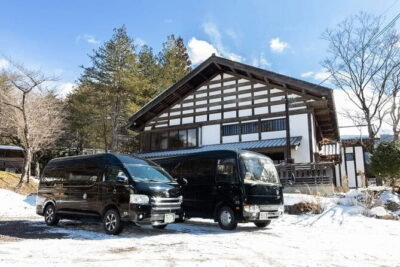
Full Day Private Skiing / Snowboarding Tour in Sapporo
Read our review →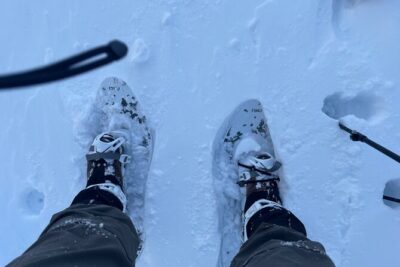
Snowshoeing and Onsen Adventures in a Winter Wonderland -Sapporo.
Read our review →
From Tokyo: Fujiyama Snow Resort Yeti Winter Ski Day Tour
Read our review →
Sapporo: Otaru Asarigawa Ski Resort Day Trip with Gear
Read our review →Browse the lists this tour appears in