
Review · NEW ZEALAND
Mount Cook: Ski Plane and Helicopter Glacier Combo Flight
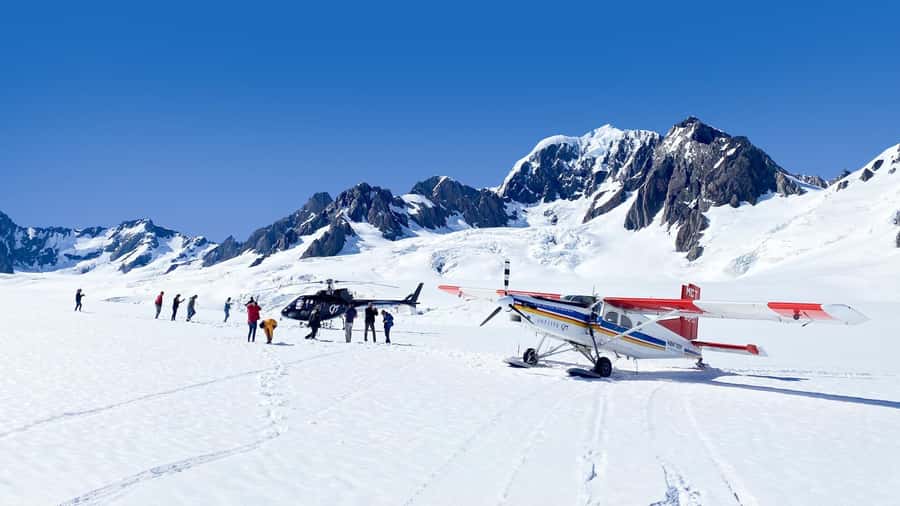
The special trick here is the aircraft change on the ice. You fly into Aoraki/Mount Cook National Park by ski plane, land on the upper Tasman Glacier, then swap to a helicopter for the return. That gives you two very different views of the mountains in one compact flight.
I like the quiet moment when the aircraft shuts down on the glacier, and I like the close look at Aoraki/Mount Cook, Hochstetter Icefall, and the long Tasman Glacier. The main catch is weather: wind and cloud can cancel the planned combination, sometimes with a shorter or helicopter-only replacement.
Key points at a glance
- Two aircraft in 45 minutes: Fly by ski plane and helicopter on the same outing, with the aircraft change taking place on the glacier.
- A real snow landing: Step onto the upper snowfields of the Tasman Glacier, New Zealand’s longest glacier.
- Big alpine views: Look for Tasman Terminal Lake, Grand Plateau, Plateau Hut, Hochstetter Icefall, and Aoraki/Mount Cook.
- Weather controls the day: Strong wind, cloud, and aircraft availability can change the route or cancel the flight.
- Travel light: Bags, food, drinks, drones, and selfie sticks are not allowed, but you can use a phone or camera.
- Plan around the timing: Check-in closes 45 minutes before departure, and full passenger names and weights are required.
A ski plane out, helicopter back
This flight gives you more variety than a standard scenic helicopter ride. You begin at Mount Cook Aerodrome, then climb over the Tasman Valley toward the glacier country of Aoraki/Mount Cook National Park.
The route includes the blue Tasman Glacier lake, Tasman Terminal Lake, the full length of the Tasman Glacier, Grand Plateau, Plateau Hut, and the Hochstetter Icefall. The exact view depends on cloud, wind, and the pilot’s route, but the core attraction is consistent: you see the glacier from above, then land on its upper snowfields.
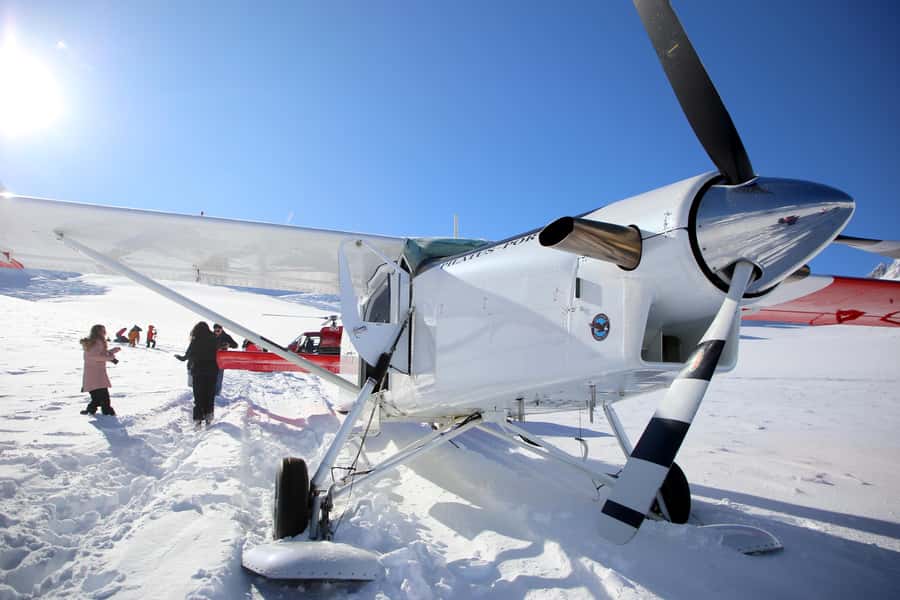
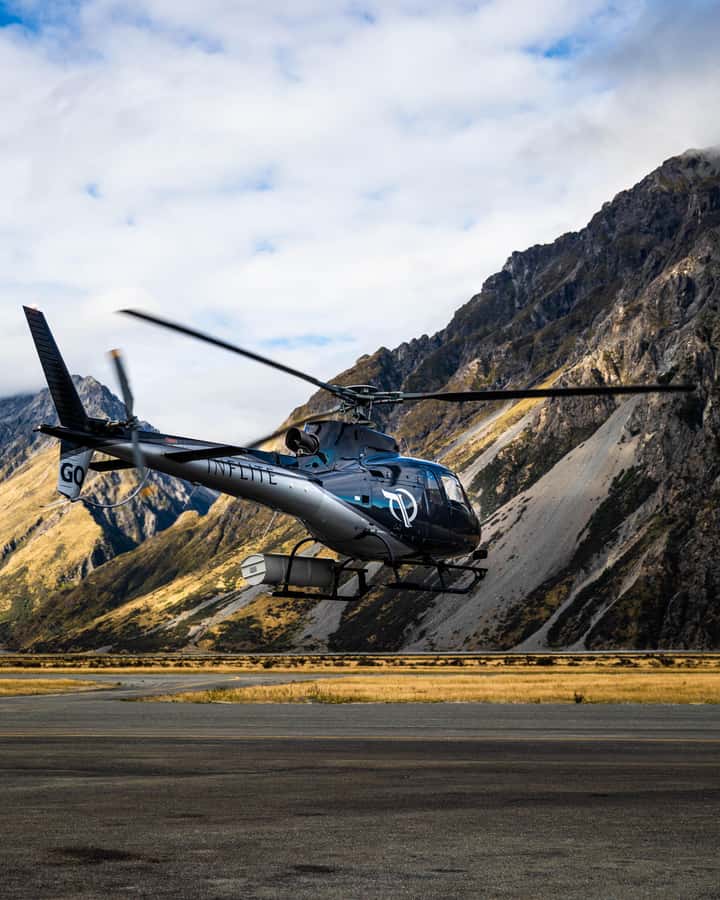
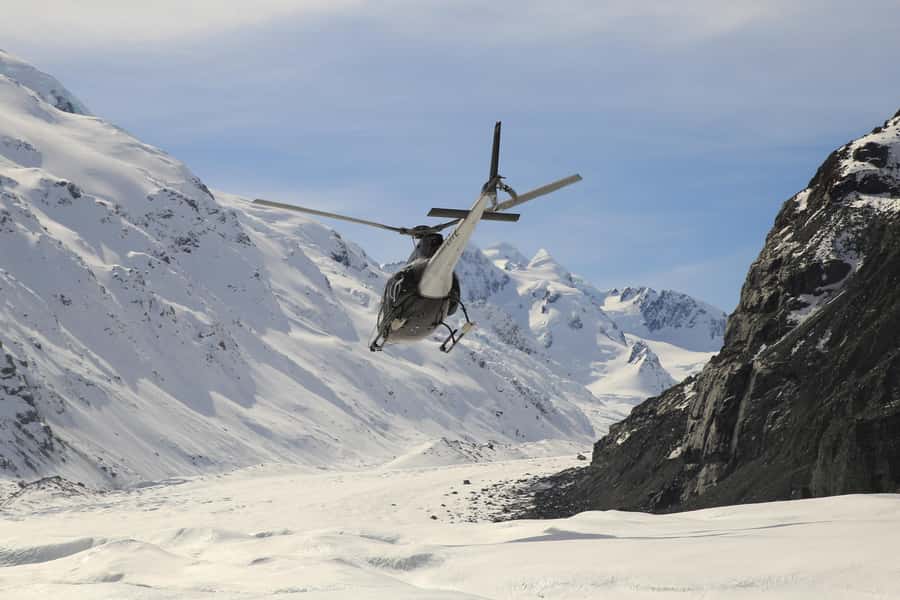
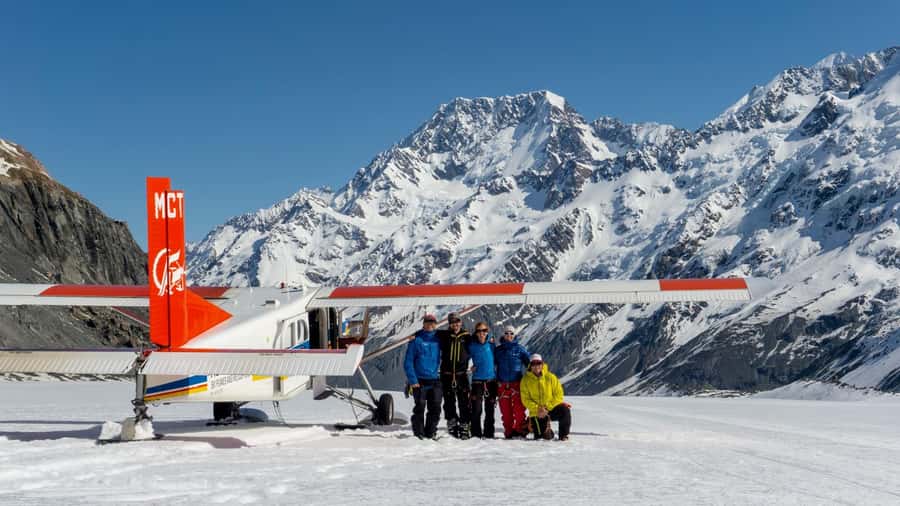
The ski plane feels like the practical alpine workhorse of the pair. Its wings give you a classic mountain-flight view, though they can block some of the scenery depending on your seat. The helicopter offers a different perspective, with a more open view and the ability to get close to steep rock and ice.
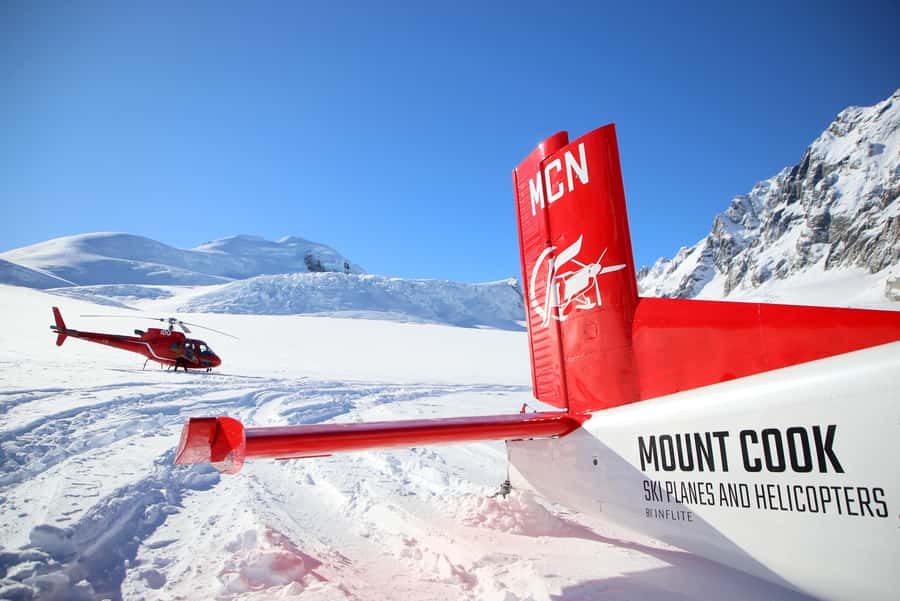
You do not simply circle the glacier and return. The plane lands on snow, the engine is shut down, and you get time in the alpine setting. Then you board the helicopter for the flight back to Mount Cook Airport. On some departures the order is reversed, with the helicopter going up and the ski plane returning. That option is worth accepting if the operator offers it, since both directions provide a slightly different experience.
More Glacier Trips in the world:
- Athabasca Glacier Snow Trip from Banff
★ 5.0 · 394 reviews - Snowshoe Hike to Castner Glacier Ice Cave
★ 5.0 · 35 reviews - Fairbanks: Guided Snowshoe Hike to Castner Glacier Ice Cave
★ 4.8 · 31 reviews
The Tasman Glacier landing is the heart of the trip
A flight over ice is impressive. Standing on it is the part you remember.
The landing takes place on the upper snowfields of the Tasman Glacier, far above the terminal lake and lower valley. The aircraft shuts down completely, giving you a rare few minutes of stillness in a place normally heard through engine noise and wind.
You can take photographs, look across the snow and mountains, and enjoy the scale of the alpine setting. The snow may be fresh and unmarked, or it may have footprints and aircraft tracks. Conditions vary, but the landing itself is the key reason to choose this experience over a standard scenic flight.
The glacier is covered in snow and ice all year round, but do not assume that the temperature will feel dramatically colder than at the airport. One January passenger found the glacier comfortable in the sun and warm enough to remove a few layers. Still, closed-toe shoes are required, and sensible warm clothing is wise because weather can shift quickly.
A snow landing also gives the trip a physical element. You are not viewing Aoraki/Mount Cook through glass for the whole outing. You step out, feel the snow under your shoes, and see how small a person looks against the ice and surrounding peaks.
What you see above Aoraki/Mount Cook National Park
The scenery changes quickly during the flight. Near the airport, you see the broad valley and lakes. As the aircraft gains height, the route narrows into the Tasman Valley, where rock walls, snowfields, and ice dominate the view.
The blue glacier lake is one of the most striking features. Its color contrasts with the surrounding ice and grey rock, and it helps you understand how water, snow, and moving ice shape the valley. The Tasman Terminal Lake sits farther down-glacier, near the end of the visible route.
The Tasman Glacier is the major subject. You see its length from above rather than only one small section from a roadside lookout. Grand Plateau and Plateau Hut add scale to the upper glacier, while Hochstetter Icefall shows the rough, broken texture of moving ice beneath the mountain.
Aoraki/Mount Cook is the visual prize. The mountain can be partly hidden by cloud, so a clear day matters greatly. When the summit and upper ridges are visible, the aircraft brings you close enough to see the height and form of the peak in a way that is hard to grasp from the valley floor.
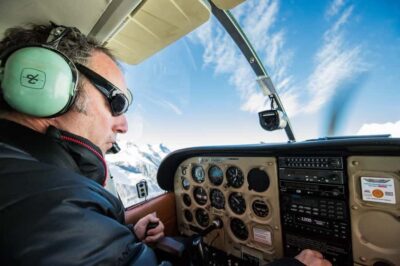
The helicopter ride usually gives the clearest sense of proximity. One pilot, Mark, was praised for bringing the aircraft close to Aoraki/Mount Cook, while pilots including Ben, Jordan, and Greg have also been singled out for smooth flying and useful commentary on different departures. The quality of commentary can vary, so do not expect a continuous lecture. Some passengers wanted more explanation, while others found the pilots engaging and well informed.
Why the aircraft change matters
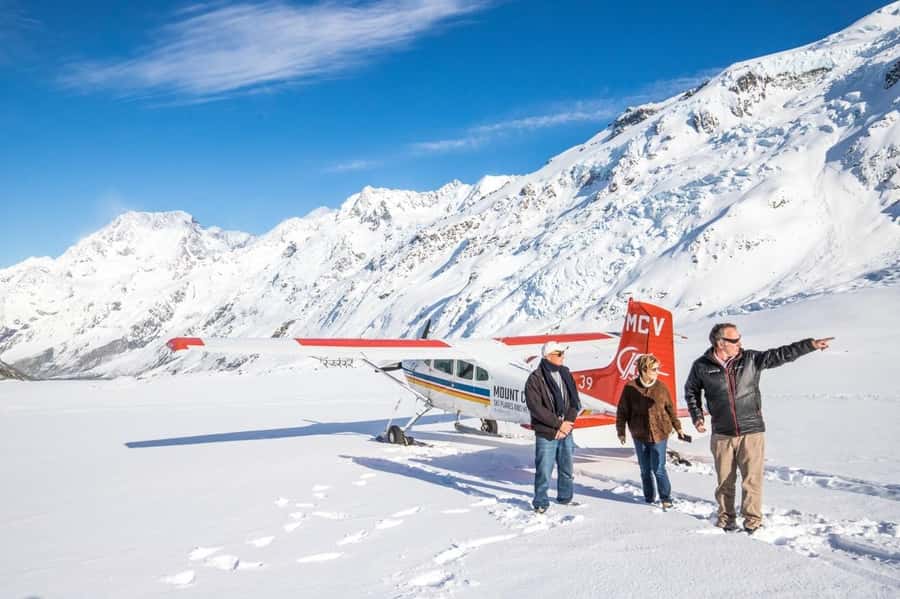
The two aircraft are not just a gimmick. They show the same mountains in different ways.
From the ski plane, you get the feeling of flying into a remote snowfield. The takeoff and landing are part of the adventure, and the wings frame the views like a traditional alpine flight. If you enjoy aircraft as much as scenery, this part may be your favorite.
The helicopter feels more intimate. It can hover and turn toward features that pass quickly from a fixed-wing aircraft, and there is less wing in the way. One practical point matters here: helicopter seating can affect your view. The back row has four passenger seats, with two seats in front, and a middle seat in the back row may give you a more restricted outlook.
You cannot choose a perfect seat from the information available, so focus on the overall experience rather than expecting uninterrupted views for the whole flight. The aircraft moves, the route changes, and everyone gets a chance to see the major sights, but a window seat will always be useful for photography.
The pilots also help with boarding and the glacier landing. A passenger who was shorter than the other people in the group appreciated help getting in and out of both aircraft. That is a small detail, but it tells you that the ground crew and pilots pay attention to practical needs.
A few more snow days around the world worth a look
- 45-Minute Mount Cook Ski Plane and Helicopter Combo Tour
★ 4.5 · 107 reviews - Mt Cook: 55-Minute Scenic Flight in Helicopter or Ski Plane
★ 4.1 · 6 reviews
Weather is part of the adventure
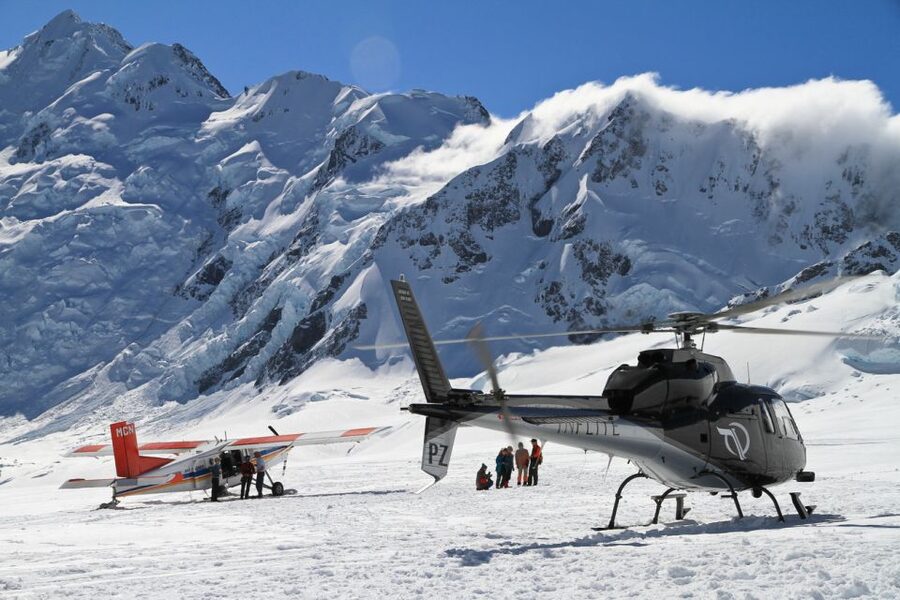
Mount Cook flights depend heavily on the mountain weather. Wind and cloud can appear quickly, and strong conditions can ground the ski plane or prevent the full combination.
You should build flexibility into your schedule. Several people had flights cancelled on the original day, then flew successfully the next day when the sky cleared. Others were moved to a later flight on the same afternoon. If you have only one spare day in the area, the $328 price carries more risk because the flight may not operate as planned.
A cancellation caused by weather is refundable, and the operator will try to reschedule you. If the ski plane cannot fly, the replacement may be a helicopter-only glacier flight or a different route. One departure went to Franz Josef Glacier instead of the Tasman Glacier when cloud moved in. That can still be a strong alpine experience, but it is not the exact itinerary described here.
Strong wind also caused some people to receive a Glacier landing rather than the full combo. In another case, a ski plane was unavailable for maintenance, and the helicopter portion went ahead. Ask what replacement is being offered and whether any price difference applies before accepting a change.
The sensible approach is to book early in your Mount Cook stay, not on the last possible morning. That gives the operator room to move you if conditions turn bad. Keep your day after the flight reasonably open too, since departure times can shift.
Is $328 a fair price?
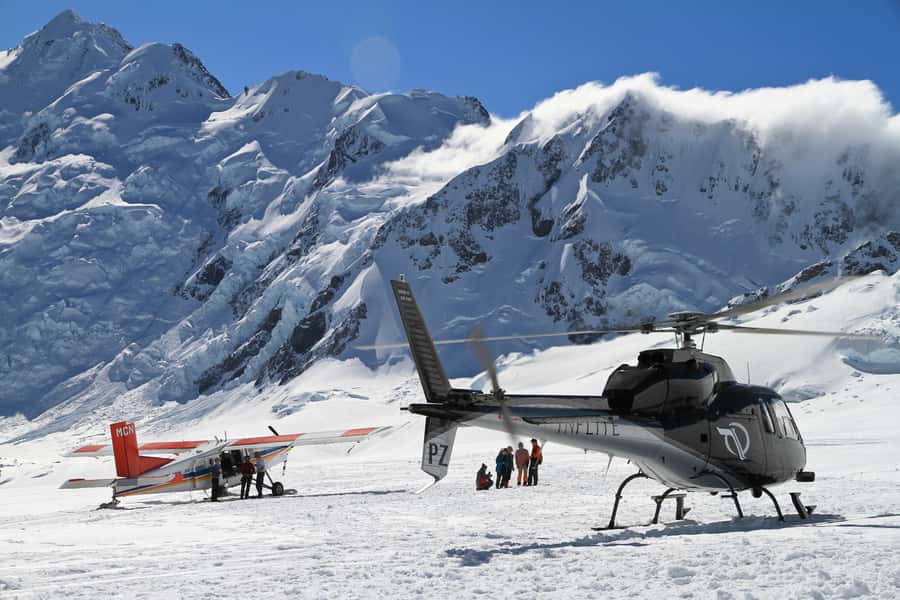
At $328 per person, this is not a casual add-on. A 45-minute flight is short, and the cost is substantial for families. You are paying for aircraft operations, pilots, safety limits, a glacier landing, and access to scenery that cannot be reached by road or an ordinary walking trail.
I think the value depends on what you want from Mount Cook. If your priority is the cheapest way to see the national park, use the valley walks and viewpoints. If you want to stand on the Tasman Glacier and see Aoraki/Mount Cook from the air, this experience offers far more than a simple sightseeing loop.
The aircraft combination improves the value. A standard helicopter flight gives you excellent views and often the glacier landing, but this trip adds the ski plane and the character of a snow runway. You also see the full Tasman Glacier and the upper valley in a short period, which is useful if your visit is brief.
The price feels harder to justify when the ski plane is replaced by a helicopter-only flight, or when the route changes because of cloud. If that happens, ask about the revised cost and what is included. Several people still found the altered flights memorable, but the exact value depends on how much you wanted the two-aircraft experience.
Practical details before you reserve
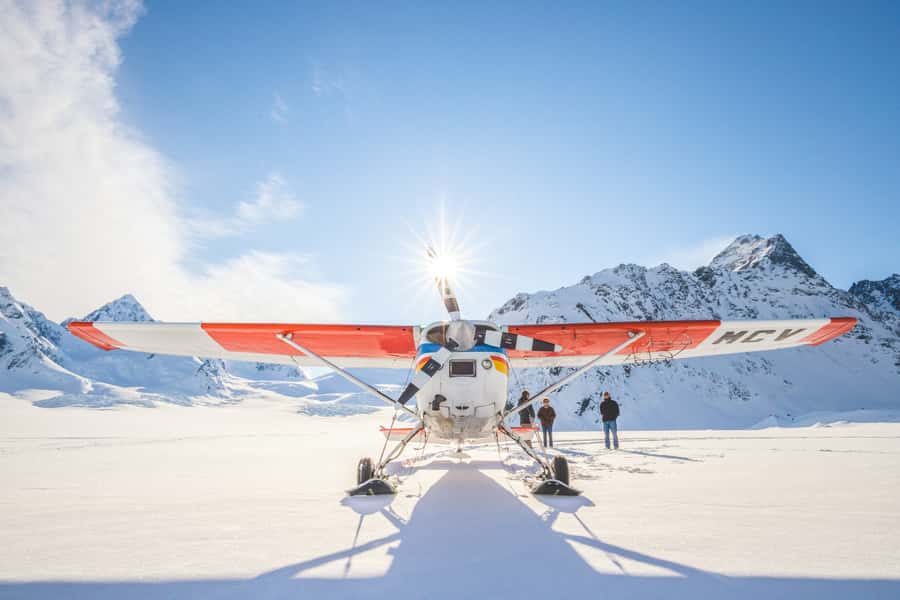
Meet at Mount Cook Aerodrome in Mount Cook National Park. Free parking is available at the airport, and free Wi-Fi is provided.
Check-in closes 45 minutes before the flight time. Treat that as a firm deadline, especially if you are driving from elsewhere on the South Island. One passenger arrived late after a road accident and a long closure on State Highway 8, then managed to move to a later flight after calling the operator. That worked out, but it is not a plan you should rely on.
You must provide every passenger’s full name and weight when booking. Weight and balance limits apply to every aircraft, and if the combined passenger weight reaches the safety maximum, your time may be changed.
Do not bring bags onboard. Food, drinks, drones, and selfie sticks are also prohibited. Phones and cameras are allowed for the entire flight, so use a small phone or camera that you can handle easily without a bag.
Wear closed-toe shoes. You can use your own phone or camera, but make sure it is secure in your hand during boarding and on the snow. The tour is in English, with an English-speaking live guide and English audio support.
Who will enjoy this most?
I would choose this for someone who wants a major Mount Cook experience rather than a short photo stop. It suits couples, families with older children, photographers, and anyone fascinated by glaciers, aircraft, or mountain scenery.
Families should note that the landing can be a hit with children. Snowball fights and time on the glacier have been memorable for young passengers, but you still need to follow the crew’s instructions and carry no loose bags.
It also suits people with limited time. In 45 minutes, you cover the Tasman Valley, glacier lakes, upper icefields, and Aoraki/Mount Cook, then step onto the snow. The pace is quick, but the range is impressive.
I would hesitate if you dislike flying, need guaranteed departure times, or cannot tolerate a possible itinerary change. This is an alpine flight, not a fixed bus tour. Weather gets the final say, and the planned aircraft combination may not be possible every day.
Should you book the ski plane and helicopter combo?
Book it if standing on the Tasman Glacier is high on your New Zealand wish list and you can protect a backup day for weather. The two aircraft make the outing distinctive, and the silent glacier stop gives you something a normal scenic flight cannot.
Choose a different activity if your budget is tight or your schedule is rigid. If you do book, arrive early, bring only a phone or camera, give accurate passenger weights, and accept that the safest and best route may change. For a clear day, this is one of the most direct ways to experience the scale of Aoraki/Mount Cook, the Tasman Glacier, and the high snowfields in one outing.
FAQ
How long is the Mount Cook ski plane and helicopter flight?
The planned experience lasts 45 minutes from departure to return. Check availability for the available starting times.
Where does the flight depart?
The meeting point is Mount Cook Aerodrome in Mount Cook National Park, New Zealand.
Do I fly in both a ski plane and a helicopter?
Yes. The planned experience includes a ski plane flight, a helicopter flight, and a glacier snow landing. The order can vary, with one aircraft taking you up and the other returning you to the airport.
Where does the glacier landing take place?
The landing takes place on the upper snowfields of the Tasman Glacier, New Zealand’s longest glacier.
What sights can I see during the flight?
The route can include the Tasman Valley, the blue glacier lake, Tasman Terminal Lake, Grand Plateau, Plateau Hut, Hochstetter Icefall, the full length of the Tasman Glacier, and Aoraki/Mount Cook.
What should I wear or bring?
Wear closed-toe shoes. You may bring and use a phone or camera, but bags are not allowed onboard.
Can I bring food, drinks, a drone, or a selfie stick?
No. Food, drinks, drones, selfie sticks, and bags are not allowed on the aircraft.
What happens if the weather cancels the flight?
A weather cancellation is refundable, and the operator will try to reschedule the flight. The replacement may be a different flight, a shorter experience, or a helicopter-only glacier trip, depending on conditions and availability.
Why do I need to provide passenger weights?
Weight and balance limits apply to all aircraft. You must provide each passenger’s full name and weight, and a flight time may be changed if the combined passenger weight reaches the maximum safety limit.
Just added around the world
- Zell am See Kaprun: Private Ski Guiding with Hajo★ 5.0 · 3 reviews
- Whitehorse: Half-Day Snowshoeing Tour★ 5.0 · 6 reviews
- Zermatt: Private Ski Guide with Experienced Ski Instructor★ 5.0 · 2 reviews
- Vialattea: Snowshoeing in the Snowy Forest★ 4.9 · 10 reviews
- Snowshoeing in Triglav National Park★ 5.0 · 4 reviews
- Vienna: Relaxed Alpine Snowshoe Experience Guide & Transfer★ 5.0 · 3 reviews
- Vialattea: Night Snowshoeing under the Stars★ 4.5 · 5 reviews
- Whistler: Backcountry Snowshoeing Tour with Guide★ 5.0 · 9 reviews
New Zealand Ski Trips, compared.
45-Minute Mount Cook Ski Plane and Helicopter Combo Tour
Read our review →
45-Minute Glacier Highlights Ski Plane Tour from Mount Cook
Read our review →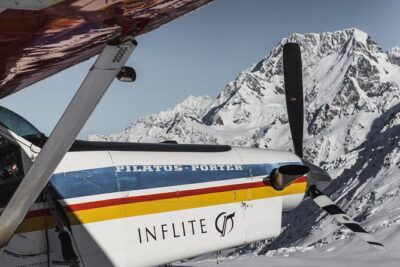
Mt Cook: 55-Minute Scenic Flight in Helicopter or Ski Plane
Read our review →
From Queenstown: Cardrona First Timer Ski or Snowboard
Read our review →
From Queenstown: Cardrona Ski/Snowboard Rentals & Transfer
Read our review →Browse the lists this tour appears in